Learning with Baldeep Singh, also addressed honorifically as Bhāī Baldeep Singh, is an opportunity to study with the principal teacher, researcher, practitioner, instrument-maker, archivist, and institutional founder whose life’s work has been devoted to the recovery, documentation, restoration, teaching, and transmission of the endangered ecosystems of Gurbāṇī Saṅgīt and the music of Srī Gurū Granth Sāhib.
For legal, statutory, banking, tax, audit, CSR, and formal institutional purposes, the name is Baldeep Singh. The honorific forms Bhāī Baldeep Singh, Bhāī Jī, Bhāī Sāhib, and Singh Sāhib may be used in cultural, social, artistic, pedagogical, public-facing, and correspondence contexts.
A Living Pedagogy
A class with Bhāī Baldeep Singh is not a casual music lesson. It is an entry into a living discipline shaped by memory, listening, practice, correction, humility, research, textual care, historical responsibility, and sustained engagement.
Students may encounter music not as entertainment alone, but as a knowledge system: rāga, tāla, laya, bāṇī, language, notation, instrument, oral memory, body, breath, ethics, craft, and archive.
The teaching is rooted in the conviction that heritage cannot be revived by imitation, performance display, or institutional slogans. It must be rebuilt through discipline, evidence, practice, and transmission.
Mentor of an Ecosystem
Bhāī Baldeep Singh’s work has not been confined to singing, performing, or teaching compositions. Over decades, he has ideated and led a wider recovery of the ecosystem around Gurbāṇī Saṅgīt and related GurSikh heritage traditions.
This ecosystem includes:
- the study and restoration of historical rāga-tāla practice;
- period repertoire and song forms including dhurpada / dhrupad, channt, vār, padē, śabad, slōka, dohrā, and related forms;
- the musical continuum from the 12th-century era of Bhagat Jaidēva and Bābā Śeikh Farīd, through the Gurū-Sikh period, and into the 17th–18th century era of Sāhib Srī Gurū Gobind Singh Ji;
- notation, transcription, indexing, and publication;
- study of source manuscripts, old prints, and archival documents;
- revival and conservation of heritage instruments;
- mridañg, jōṛī, pakhāwaj, and the Sultanpur–Amritsarī Bāj;
- luthiery, instrument-making, repair, and sound-craft;
- oral histories and memory of aged knowledge-bearers;
- audio-visual restoration and archival listening;
- pedagogy, saṅthiā, pronunciation, and textual attention;
- calligraphy, manuscript arts, paper, ink, binding, and related craft ecologies;
- conservation of both sthūl virsā — tangible heritage — and sūkham virsā — intangible heritage.
To be mentored by him is therefore to encounter not one subject, but an interlinked world of practice, research, memory, and responsibility.
Learning Lineages and Comparative Research
Bhāī Baldeep Singh’s pedagogy draws from decades of direct learning, fieldwork, oral-history work, archival recovery, and comparative study across several musical and pedagogical streams.
His learning includes the Girvaṛī Ṭaksāl, Sēkhvāñ Ṭaksāl, and Darbār Sāhib Paramparā of Gurbāṇī Saṅgīt, with elders including Bhāī Gurcharan Singh Rāgī, Bhāī Avtar Singh Rāgī, Ustād Bhāī Arjan Singh Taraṅgaṛ, Bhāī Balbir Singh Rāgī, Bhāī Ratan Singh, Bībī Jaswant Kaur, and other memory-bearers of the tradition.
His comparative study also includes engagement with dhrupad-related vāṇī-s and streams, including Ḍāgurvāṇī with Ustād Rahim Fahimuddin Khan Dagar, Khaṅḍārvāṇī with Ustād Mohd. Hafiz Khan Khaṅḍehrē, and wider reflection upon Gurūvāṇī, Nauhārī Vāṇī, and related historical lineages of rāga, tāla, song-form, voice, pedagogy, and repertoire.
A decisive part of this journey was the guidance of Professor Dr. Sumati Mutatkar, who advised him not to alter the inherited family style by learning indiscriminately from other modern dhrupad or gharānā exponents. Her counsel sharpened his understanding that “dhrupad” itself was not a single undifferentiated category, but a field of distinct vāṇī-s, schools, lineages, aesthetics, and individual preferences. This discernment deepened his ability to recognise the uniqueness of the older Gurbāṇī Saṅgīt systems and to engage other traditions comparatively, without collapsing them into one another.
His percussion learning includes jōṛī, pakhāwaj, mridañg, and the Sultanpur–Amritsarī Bāj, especially through Ustād Bhāī Arjan Singh Taraṅgaṛ and related elders and students of that tradition. This includes attention to bol, layā, tāla, mukāo, sāth-dī-rīti, repertoire, compositional forms, and the relationship between percussion, text, and rāga.
This background allows his classes to move beyond tune-learning into a wider study of historical song forms, period repertoire, oral pedagogy, archival materials, instruments, notation, rhythm, craft, and the living ecology of transmission.
What Students May Study
Depending on the student’s level, preparation, discipline, and the teaching context, classes may include:
Gurbāṇī Saṅgīt
Students may study rāga, tāla, repertoire, notation, oral pedagogy, listening, melodic development, textual care, and the music of Srī Gurū Granth Sāhib.
Historical Song Forms and Period Repertoire
Students may be introduced to period song forms and compositional structures associated with the older musical world of South Asia and the GurSikh tradition, including dhurpada / dhrupad, channt, vār, padē, śabad, slōka, dohrā, and related forms.
This study may include repertoire and historical memory extending from the 12th-century era of Bhagat Jaidēva and Bābā Śeikh Farīd, through the Gurū-Sikh period, and into the 17th–18th century era of Sāhib Srī Gurū Gobind Singh Ji.
The aim is to help students recognise that Gurbāṇī Saṅgīt is rooted in a long historical continuum of rāga, tāla, poetic form, oral pedagogy, liturgical memory, and period performance practice.
Rāga and Rāga-Aṅg
Teaching may include attention to rāga identity, rāga-aṅg, melodic movement, restraint, grammar, memory, and the difference between surface tune-learning and deeper rāga understanding.
Tāla, Laya, and Percussion Vidyā
Students may encounter tāla, laya, layakārī, bol, mukāo, rhythmic structure, and the relationship between singing and percussion.
Those studying mridañg, jōṛī, or pakhāwaj may receive guidance according to level and suitability, including exposure to the Sultanpur–Amritsarī Bāj, historical percussion vocabulary, sāth-dī-rīti, repertoire, compositional types, and the disciplined relationship between tāla, text, and melodic form.
Repertoire and Notation
Students may learn repertoire through oral transmission, supported where appropriate by notation, explanation, repetition, and correction. Notation is treated as a support to memory and discipline, not as a substitute for living instruction.
Gurūbāṇī and Textual Attention
Students may be guided in pronunciation, listening, textual awareness, meaning, line structure, and care toward the revealed Bāṇī of Srī Gurū Granth Sāhib.
Listening and Archival Awareness
Classes may include exposure to archival recordings, historical references, old notations, oral accounts, and source materials where appropriate, helping students understand the difference between inherited practice, later influence, and modern imitation.
Instruments and Craft
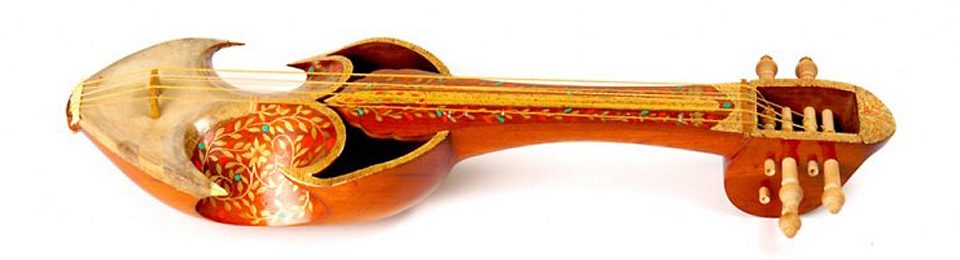
Students may be introduced to heritage instruments, their sound-world, construction, maintenance, tuning, and cultural context. This may include rabāb, tāus, sarindā, jōṛī, pakhāwaj, mridañg, and related instruments.
The Method
The teaching may include:
- demonstration;
- repetition;
- listening;
- correction;
- questioning;
- memorisation;
- notation support;
- voice and breath awareness;
- rhythmic recitation;
- source discussion;
- historical explanation;
- archival listening;
- practice assignments;
- reflective conversation;
- individual and group learning.
Students are expected to listen carefully, practise consistently, and return with evidence of work done.
Discipline and Expectations
Learning with Bhāī Baldeep Singh requires sincerity, patience, punctuality, practice, humility, and respect for the tradition.
Students are expected to avoid shortcut learning, borrowed vocabulary without practice, careless imitation, casual attendance, and the desire for quick public display before internal preparation.
The learning process may be demanding because the subject itself is demanding. Correction is part of care. Repetition is part of refinement. Silence and listening are part of study.
Who May Learn
Classes may be suitable for:
- beginners with sincerity and discipline;
- continuing students of Gurbāṇī Saṅgīt;
- singers and instrumentalists;
- jōṛī, pakhāwaj, mridañg, and percussion learners;
- researchers and scholars;
- teachers and advanced practitioners;
- students interested in rāga, tāla, notation, historical song forms, and oral pedagogy;
- learners connected with Anād retreats and YaarAnād;
- persons interested in heritage conservation, archives, instruments, and living transmission.
Admission or participation may depend on suitability, preparation, available time, teaching capacity, and the Foundation’s learning framework.
Online and In-Person Learning
Classes may take place online, in person, in small groups, during retreats, workshops, masterclasses, or special study sessions.
Since 2020, Anād’s online teaching ecology has allowed students across geographies to remain connected through regular classes, senior-student sessions, masterclasses, listening, correction, and continued practice.
In-person learning remains important wherever possible, especially for voice, percussion, instrument study, craft exposure, and retreat-based immersion.
Mentorship Beyond Class Time
Mentorship may extend beyond the formal class into a wider discipline of study: listening, reading, writing, practice, documentation, sevā, archive work, instrument care, retreat participation, and support for institutional work.
Students may be encouraged to understand the tradition not merely as personal accomplishment, but as a responsibility toward continuity.
Fees, Support and Guru-Dakṣiṇā
The Foundation recognises that sincere students come from varied financial backgrounds. Learning arrangements may differ according to context, student capacity, programme type, institutional needs, and the Foundation’s policies.
Students may be supported through scholarships, concessions, self-determined contributions, donor-supported learning, retreat support, voluntary service, or appropriate guru-dakṣiṇā where possible.
What is most valued is sincerity, regularity, ethical conduct, practice, and respect for the vidyā.
Relationship with Anād Khaṅḍ
Class with Bhāī Baldeep Singh is part of the wider work of Anād Khaṅḍ, the Foundation’s conservatory and heritage-transmission framework.
The aim is not only to teach individual students, but to rebuild the conditions through which a tradition may survive: archives, instruments, publications, pedagogy, students, teachers, craft practitioners, recordings, manuscripts, and living practice.
Enquiries
Those interested in studying may contact The Anād Foundation with a brief note describing their background, area of interest, previous training if any, availability, and reason for wishing to study.
Participation is subject to suitability, teaching capacity, schedule, discipline, and the Foundation’s learning framework.

Gurbāṇī Saṅgīta: Rabāb dedicated to Guru Nanak & Bhai Mardana – with visiting students

Gurbāṇī Saṅgīta: 52-stringed Tāūs – with visiting students

Gurbāṇī Saṅgīta: Nomadic Rabāb – with visiting students

Gurbāṇī Saṅgīta Retreat – Nirvair Kaur on the Tāūs, Sat Kirtan Kaur & others

Gurbāṇī Saṅgīta Retreat – Amrita plays pakhāwaj

Gurbāṇī Saṅgīta Retreat – practicing a Rāga Tīḳā

Gurbāṇī Saṅgīta Retreat – Keerat Kaur, Nanaki, Harshdeep, Kulmeet, Iqbal & others

Gurbāṇī Saṅgīta Retreat – Harbhajan Kaur

Gurbāṇī Saṅgīta Retreat – Gurmukh Singh, Francesca Cassio, Siri Sevak Kaur & Jasdeep Kaur

Gurbāṇī Saṅgīta Retreat – Nihal Singh on Tablā