Study at Anād brings together the Foundation’s learning, teaching, retreat, workshop, apprenticeship, research, documentation, and public-education initiatives.
For legal, statutory, banking, tax, audit, CSR, and formal institutional purposes, the Foundation’s legal name is The Anad Foundation. The form Anād is used as the Foundation’s preferred cultural, scholarly, programme, publication, and public-facing style.
Learning as Transmission
Anād understands study not merely as information-gathering, but as transmission: the disciplined movement of knowledge from teacher to learner, from archive to practice, from memory to method, and from inherited tradition to responsible continuity.
The Foundation’s educational work may include music, language, manuscripts, instruments, craft traditions, oral histories, archives, calligraphy, paper, ink, binding, luthiery, documentation, public learning, and related heritage fields.
Core Areas of Study
Gurbāṇī Saṅgīt
Anād offers learning connected with Gurbāṇī Saṅgīt and the music of Srī Gurū Granth Sāhib, including rāga, tāla, repertoire, notation, pronunciation, pedagogy, performance practice, listening, memory, and historical sources.
This study is rooted in the understanding that Gurbāṇī Saṅgīt is not merely a performance genre, but a living system of musical, textual, pedagogical, and spiritual discipline.
Rāga, Tāla and Repertoire
Students may study rāga, tāla, laya, compositions, repertoire, listening methods, notation, oral pedagogy, and the relationship between musical form, text, rhythm, and practice.
Instruments and Luthiery
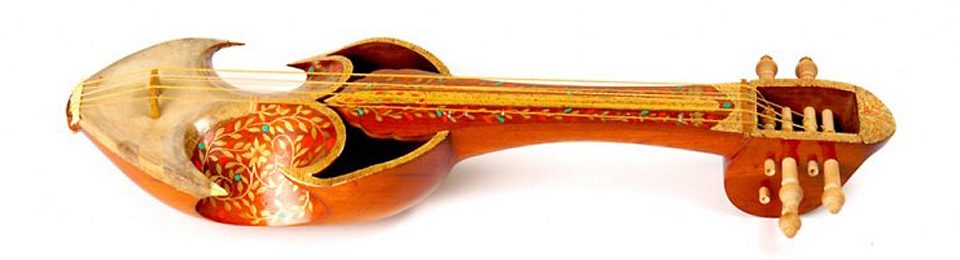
Study at Anād may include exposure to heritage instruments such as rabāb, tāus, sarindā, jōṛī, pakhāwaj, mridaṅg, and related instruments.
Where possible, learners may also encounter instrument care, tuning, repair, materials, tool use, and the wider craft ecology of luthiery.
Manuscripts, Archives and Documentation
Anād’s study programmes may include archival awareness, manuscript documentation, cataloguing, scanning, metadata, oral-history recording, audio-visual restoration, field documentation, and research methods.
Calligraphy, Paper, Ink and Binding Traditions
Subject to available teachers, resources, and project needs, Anād may support learning in calligraphy, scribal traditions, manuscript preparation, paper-making, ink-making, pigment and colour preparation, binding, folio preparation, writing tools, burnishing, and related manuscript-craft knowledge.
Vernacular Skills and Cultural Memory
Study may also extend to vernacular craft traditions, textile memory, attire practices, turban traditions, phulkārī, hand-based knowledge systems, and other areas where tangible and intangible heritage meet.
Classes and Continuing Learning
Anād’s teaching work may include in-person and online classes, guided study, practice sessions, small-group learning, lecture-demonstrations, and mentoring.
The Foundation has also supported sustained online learning communities, including continuing classes and study circles that allow students across geographies to remain connected with teaching, practice, and reflection.
Retreats
The Gurbāṇī Saṅgīt Intensive Retreats are among Anād’s important learning initiatives. These retreats offer students an immersive environment for study, listening, practice, discussion, reflection, and disciplined engagement with Gurbāṇī Saṅgīt, rāga, tāla, repertoire, and related heritage fields.
Retreats may include singing, percussion, listening, notation, historical study, instrument exposure, language work, group practice, individual guidance, and community learning.
Workshops and Public Programmes
Anād may organise workshops, public classes, lecture-demonstrations, seminars, rāga darbārs, baiṭhaks, exhibitions, listening sessions, and documentation-based learning programmes.
Such programmes may be designed for students, researchers, practitioners, teachers, families, institutions, donors, and interested members of the public.
Apprenticeship and Practice
Many heritage skills cannot be learned quickly or casually. They require repetition, correction, discipline, humility, observation, and sustained practice.
Anād may support apprenticeship-style learning in areas such as music, percussion, instrument care, luthiery, archival work, documentation, calligraphy, manuscript arts, craft traditions, and public-learning support.
Research and Publications
Learning at Anād is closely linked with research and publication. Students and researchers may engage with notation, transcription, translation, transliteration, indexing, cataloguing, editing, scanning, audio-visual restoration, field notes, oral histories, and publication preparation through Anād Research & Publications Office (ARPO) and related work.
Who May Study
Anād’s learning programmes may be open, according to context and capacity, to:
- children and young learners;
- students and researchers;
- musicians and practitioners;
- artisans and craft learners;
- teachers and educators;
- community members;
- heritage workers;
- institutional participants;
- serious listeners and seekers of deeper study.
Admission, participation, or access may depend on programme type, teacher availability, project capacity, level of preparation, discipline, suitability, and the Foundation’s policies.
Certificates and Formal Recognition
Where statutory recognition is required for degrees, diplomas, certificates, or formal credentials, the Foundation shall seek approval from competent authorities before representing any such credential as officially recognised.
Until then, the Foundation may issue internal certificates of participation, attendance, completion, training, proficiency, workshop completion, fellowship, or apprenticeship, clearly indicating their nature and scope.
Ethics of Study
Study at Anād requires sincerity, respect, discipline, listening, practice, and responsibility toward the tradition, the teacher, fellow learners, archives, instruments, and the larger public purpose of heritage conservation.
Learning is not treated as consumption. It is treated as participation in a living responsibility.
Enquiries
For enquiries about classes, retreats, workshops, apprenticeships, research access, archival learning, or institutional programmes, please contact The Anād Foundation.
Is music taught at Anad? Sikh music in specific. I am a music aspirant. My name is Navpreet, i am 18 years old. I am learning the Tanti Saaz Dilruba/Taus in Chandigarh. I would like to expand my learning and refine it by learning from such great Ustads.
Yes, Navpreet Ji, it is possible to study at Anad.
Navpreet G Where in Chandigarh are you studying Dilruba from ? I am also from Chandigarh and so far I have not managed to get one single techer worth his salt in the tricity area ? Please do let me know the address, cos I am also interested in learning Taus and Dilruba !
Thanks !
Yes, Navpreet and Gurparteet, Music is taught at Anad – you may email us at bhaibaldeep@gmail.com
Best,
bbs
GurFateh. My Name is Jagtar Singh from Hamburg Germany, I am 23 years old and have started to study Kirtan. My innermost wish is to learn puratan Kirtan as it was taught by Guru Ji Maharaj and the very beautiful sounding rabab. Is there somebody, who teaches Rabab at the Anad foundation. Please let me know who to get in contact with.
Thanks
Jagtar Singh
Gur Fateh!
Thank you for your message and am glad to hear about your interest in Gurbani Sangeet – my son Luigi Hari Tehel Singh is studying in Bologna, Italy and plays the Dhurpadi Rabab. He can show you the basics. You can avail Skype lessons – email at bhaibaldeep@gmail.com
Best…
Satgur Fateh!
Yes, you can learn the Rabab at Anad. I am glad to hear of your interest in Gurbani Sangeet and Kirtan.
Warmly,
bbs
i want to learn rabab and taus
can you teach me
Sure, why not!
It will be my pleasure to share from the twopence that I have with you Arvinder Singh Ji!
I a tanyti Saaz Student.I need to procure a Taus made under Bhai Baldeep Ji’s guidelines and inspection. Kindly help me. Been looking for an Instrument for two years now. I am desparate now.
Waiting for a reply…
seems you are busy doing seva to the mankind.
no problem…i can wait more…
Sat Sri Akaal Bhaisaab !
Let me not delay in telling you that I’m a great fan of yours , your personality is very appealing. I just love the way you wear your turban.
You’re blessed with such an art which immediately distinguishes you from the common/ers. May this uniqueness be blessed and protected forever and ever by Almighty’s grace.
Bhaisaab I share quite many interests with you,but never got a chance to learn and polish the skill formally under Guru’s guidance. Also since nobody in the family had an art orientation,it was not inculcated in my childhood. Now feels that if life is not wasted and invested in such interests,the fruit of it will nourish the soul from within,and it will be a lot livable than it is now.
I’m 30 yrs old,with no knowledge of music and polluted with worldly thoughts. Can I be taught from the beginning after wiping out the dirt accumulated? I would love to be your student !
Sat Kartār!
Ajaipal Ji,
Thank you for your message — do excuse for this inadvertently late response!
You may please write to bhaibaldeep@gmail.com
Best wishes,
Anād Office
Vaheguru Ji ka Khalsa,
Vaheguru Ji Kee Fateh.
Bhai Sahib Ji were are you teaching ?
I am currently teaching online.
Sat shri akal ji my name is nischayjit singh. I am from mississauga canada. I want to learn rabab.plz guide me.
Thank you for your interest in learning the Rabāba! You may write to bhaibaldeep@gmail.com
Best wishes,
Anād Office
I am interested to learn rabab
I want to learn the dhuni which are in guru granth sahib pls help me
Hi, i want to learn puratan kirtan. I am already learning tabla from Ustad Joginder singh ji.. Please help.
Sure, you may write to bhaibaldeep@gmail.com
Sat Sri Akal
i am keen on learning Kirtan. Could you teach me, please?
Sat shri akal ji
Was wondering if online classes are available?
Yes, there are. Please email at anad@anad.in with a copy to bhaibaldeep@gmail.com
Yes, ji. Please email at anad@anad.in with a copy to bhaibaldeep@gmail.com
SAT SRI AKAL ,
I WANTED TO KNOW ,IF I CAN JOIN ANY CLASSES AT ANAD?
Yes, you can. Please email at anad@anad.in with a copy to bhaibaldeep@gmail.com
Sat Sri Akal Ji, I wanted to ask about the classes that I can join at Anad .
I’ve already met up with Bhai Baldeep Singh , online, and I’m just asking about the classes that were discussed .
Shukriya
On Mon, 31 Jan 2022, 3:37 am The Anād Foundation, wrote:
> Anad Foundation commented: “Yes, you can. Please email at anad@anad.in > with a copy to bhaibaldeep@gmail.com” >
Gur Fateh ji!
I am a 22 yrs old learner from South Delhi ji, and keen to learn Rabab instrument in person ji. Is there any opportunity we have here to learn ji.
Sure, it is possible—please email BBS at Bhaibaldeep@gmail.com; someone from his office will connect.