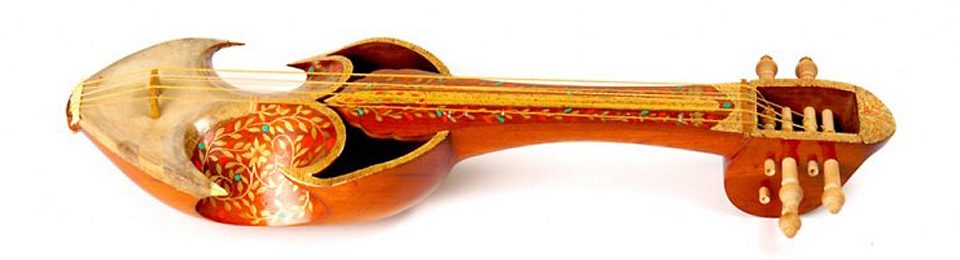
Anād Khaṅḍ — Instrument-Making, Conservation and Sound-Craft Traditions
The Luthiery School of Anād Khaṅḍ is envisioned as a dedicated space for the research, documentation, conservation, restoration, making, maintenance, teaching, and public understanding of heritage musical instruments and their associated craft traditions.
For Anād, a musical instrument is not merely an object. It is a meeting point of sound, memory, material, measurement, hand-skill, repertoire, pedagogy, performance practice, and lineage. Its conservation therefore requires more than repair; it requires the recovery of the knowledge systems that made the instrument possible.
Purpose
The Luthiery School seeks to support the revival and continuity of endangered instrument-making and instrument-care traditions connected with Gurbāṇī Saṅgīt, the music of Srī Gurū Granth Sāhib, and wider South Asian musical heritage.
Its work may include:
- research and documentation of heritage instruments;
- conservation and restoration of old instruments;
- making of new instruments based on historical models and informed practice;
- study of measurements, proportions, materials, acoustics, and construction methods;
- training of students, apprentices, artisans, musicians, and researchers;
- documentation of tools, templates, stencils, workshop methods, and craft memory;
- support for associated craft practitioners and material suppliers;
- public demonstrations, exhibitions, workshops, and educational programmes.
Instruments of Focus
The Luthiery School may work with instruments including, but not limited to:
- rabāb;
- tāus;
- sarindā / saranda;
- jōṛī;
- pakhāwaj;
- mridaṅg / mridañg;
- bowed, plucked, struck, and percussion instruments connected with Gurbāṇī Saṅgīt and wider South Asian traditions;
- instrument bodies, bows, bridges, strings, skins, straps, cases, tools, and accessories.
The specific instrument pages under this section may document individual instruments, restoration histories, student instruments, workshop notes, images, and research findings.
Instrument as Tangible and Intangible Heritage
A musical instrument belongs simultaneously to sthūl virsā — tangible heritage — and sūkham virsā — intangible heritage.
Its tangible dimension includes wood, leather, gut, metal, strings, skin, glue, polish, bridges, pegs, frets, resonators, bows, cases, tools, and workshop materials.
Its intangible dimension includes tuning, touch, sound-preparation, repertoire, playing technique, posture, maintenance practice, rhythmic and melodic use, oral instruction, acoustical judgement, and inherited workshop memory.
The Luthiery School therefore treats instrument-making as both a material craft and a living knowledge system.
Craft Ecology
Traditional instrument-making depends on many linked skills and occupations. The Luthiery School may document and support:
- woodworking and carving;
- leather preparation and application;
- gut-string and string-making;
- bow-making;
- bridge-making;
- metalwork and fittings;
- tool-making and maintenance;
- stencil and template preparation;
- polish, finish, and surface treatment;
- storage, cases, humidity care, and handling;
- repair and performance-readiness.
This craft ecology includes tarkhāṇ, lōhār, camār, suṇiār, string-makers, box-makers, polishers, repairers, musicians, and teachers. When these networks weaken, instruments may survive visually but lose their sound-world.
Conservation and Restoration
The Foundation’s instrument-conservation work may include:
- condition assessment;
- photographic documentation;
- measurement and drawing;
- material identification;
- stabilisation;
- careful cleaning;
- structural repair where appropriate;
- replacement of missing parts only where justified;
- storage and preventive care;
- playable restoration where conservation ethics permit;
- documentation of all interventions.
Not every old instrument should be made playable. Some may require archival care only. Others may be restored for teaching, demonstration, recording, or performance use. Each decision must balance conservation ethics, musical function, material condition, ownership, risk, and public-interest purpose.
Making New Instruments
The Luthiery School may also support the making of new instruments based on research, historical examples, practical knowledge, and living pedagogy.
New instruments are necessary because living traditions cannot survive only on museum pieces. Students, teachers, performers, and archives need instruments that can be handled, tuned, sounded, repaired, compared, and studied.
New making also keeps craft memory alive.
Pedagogy and Apprenticeship
Instrument-making cannot be learned only from diagrams. It requires supervised practice, observation, repetition, correction, listening, and apprenticeship.
The Luthiery School may therefore support:
- practical workshops;
- apprenticeship programmes;
- demonstrations by instrument-makers;
- supervised repair sessions;
- measurement and drawing exercises;
- material-identification sessions;
- sound-testing and tuning sessions;
- documentation training;
- conservation-awareness modules;
- student access to instruments and tools.
Documentation
Documentation is central to the Luthiery School. This may include:
- photographs and videos of instruments and repair processes;
- measured drawings and construction notes;
- tool and material catalogues;
- oral histories with makers, players, and custodians;
- interviews with aged artisans and musicians;
- sound samples and tuning demonstrations;
- condition reports and conservation logs;
- digital records and metadata;
- publication of research notes, manuals, catalogues, and teaching materials.
Relationship with Gurbāṇī Saṅgīt
Many instruments associated with Gurbāṇī Saṅgīt have suffered from neglect, replacement, symbolic display, or misunderstanding. Their revival requires knowledge of both the physical instrument and the musical system for which the instrument lives.
The Luthiery School is therefore connected with Anād’s work in Gurbāṇī Saṅgīt, rāga, tāla, repertoire, notation, pedagogy, performance practice, and oral traditions.
Instruments must be understood not as decorative heritage, but as carriers of musical knowledge.
Public Learning and Display
The Luthiery School may support public-learning activities such as:
- instrument exhibitions;
- guided demonstrations;
- student workshops;
- listening sessions;
- conservation displays;
- craft-process demonstrations;
- lectures and lecture-demonstrations;
- documentation-based publications;
- digital galleries and educational resources.
The aim is to help visitors understand the relationship between instrument, craft, sound, repertoire, and living transmission.
Future Development
Subject to resources, donor support, CSR support, Board approval, professional guidance, and available space, the Luthiery School may develop:
- instrument conservation workbenches;
- woodworking and repair tools;
- climate-aware storage;
- instrument display systems;
- documentation and photography stations;
- audio recording and sound-testing facilities;
- apprenticeship and training modules;
- specialist workshops;
- a reference collection of instruments, tools, templates, strings, skins, bows, bridges, and materials.
Institutional Character
The Luthiery School is a public-interest initiative of The Anād Foundation. It is not intended merely as a commercial workshop, showroom, or repair service. Its purpose is research, conservation, teaching, documentation, craft revival, public education, and the transmission of endangered instrument-making knowledge.
Through this work, Anād Khaṅḍ seeks to restore the relationship between the hand that makes, the ear that listens, the body that practises, the teacher who transmits, and the instrument that carries sound across generations.