Anād Khaṅḍ is proposed as a living conservatory, archive, research centre, craft-learning space, and public-interest heritage-transmission platform of The Anād Foundation.
It is envisioned as an integrated institutional space where tangible heritage and intangible heritage can be conserved, studied, practised, documented, taught, displayed, and transmitted for public benefit.
Earlier proposals of the Foundation imagined such work through specific heritage spaces, including Sultanpur Lodhi and other historically significant sites. The present proposal carries that vision forward in a broader and more flexible form, allowing Anād Khaṅḍ to develop through archives, studios, classrooms, workshops, conservation facilities, galleries, learning displays, digital platforms, field offices, and heritage-transmission centres wherever feasible and lawful.
1. The Need
Many heritage efforts focus on buildings, monuments, objects, and visible artefacts. These are important, but they are only one part of the inheritance.
Equally endangered are the living systems of knowledge that give meaning to such materials: oral teaching, rāga-tāla systems, craft techniques, instrument-making, calligraphy, manuscript preparation, paper-making, ink-making, binding, textile memory, language, repertoire, pedagogical lineages, and the embodied memory of knowledge-bearers.
When the object survives but the knowledge around it disappears, heritage becomes mute. Anād Khaṅḍ is proposed to prevent that separation.
2. Core Principle
Anād Khaṅḍ rests on a simple principle:
First, conserve the tangible anchors of heritage; then restore the living systems of knowledge, practice, education, craft, and interpretation around them.
The Foundation therefore works with both:
Sthūl virsā — tangible heritage: manuscripts, books, instruments, buildings, archives, photographs, recordings, artworks, calligraphic works, paper, inks, pigments, tools, textiles, craft materials, and objects.
Sūkham virsā — intangible heritage: oral traditions, music, rāga-tāla knowledge, performance practice, pedagogy, memory, craft techniques, language traditions, calligraphic practice, paper-making, ink-making, pigment preparation, binding methods, and intergenerational transmission.
3. Proposed Institutional Components
Subject to available resources, site conditions, donor support, legal permissions, and Board approval, Anād Khaṅḍ may include the following components.
3.1 Archive and Preventive Conservation Unit
A dedicated unit for safe storage, cataloguing, documentation, condition assessment, digitisation, and preventive conservation of manuscripts, books, instruments, photographs, recordings, films, negatives, transparencies, field notes, calligraphic works, tools, textiles, and related heritage materials.
This may include archival cabinets, acid-free boxes, protective housings, humidity and temperature monitoring, pest-prevention systems, safe-handling protocols, conservation supplies, and trained support personnel.
3.2 Audio-Visual Restoration and Digital Preservation Unit
A facility for digitising, restoring, cataloguing, backing up, and making educational use of audio tapes, cassettes, video recordings, documentary films, field recordings, oral histories, teaching sessions, interviews, and other audio-visual holdings.
This may include restoration equipment, listening and viewing stations, metadata systems, digital storage, backup protocols, and public-learning access to selected materials.
3.3 Gurbāṇī Saṅgīt and Music of Srī Gurū Granth Sāhib Studies
A teaching, documentation, notation, research, and publication stream dedicated to Gurbāṇī Saṅgīt and the music of Srī Gurū Granth Sāhib, including rāga, tāla, repertoire, instruments, pedagogy, oral traditions, performance practice, historical sources, and associated craft knowledge.
3.4 Instrument-Making and Luthiery Studios
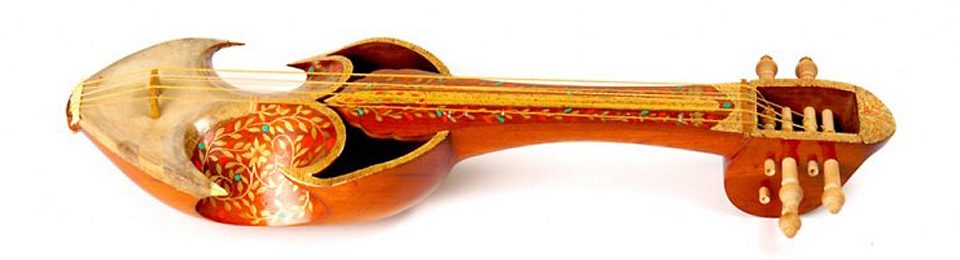
Workspaces for the study, conservation, repair, making, and documentation of heritage instruments such as rabāb, tāus, sarindā, jōṛī, pakhāwaj, mridaṅg, and related instruments.
These studios may also support associated crafts such as woodworking, leatherwork, string-making, metalwork, bow-making, tool-making, finishing, storage, and maintenance.
3.5 Manuscript Arts, Calligraphy, Paper, Ink and Binding Studio
A space for research, documentation, practice, revival, and teaching of calligraphy, manuscript preparation, traditional paper-making, ink-making, pigment and colour preparation, stone, mineral and plant-based colours, paper-sizing, folio preparation, binding, writing implements, reed, bamboo and metal nibs, brushes, burnishing tools, and related manuscript-craft ecologies.
This component recognises that manuscripts are not merely texts; they carry material knowledge, hand-memory, craft processes, tools, surfaces, inks, scripts, bindings, and visual disciplines.
3.6 Anād Research & Publications Office
Anād Research & Publications Office (ARPO) may function as the research, documentation, editing, indexing, notation, translation, transliteration, design, typesetting, scanning, publication-preparation, and dissemination unit of the Foundation.
ARPO may support books, catalogues, critical editions, educational materials, archival publications, digital resources, research notes, syllabi, manuals, and donor / CSR documentation.
3.7 Anād Dehātī Vastra
Subject to dedicated support, Anād Khaṅḍ may develop a research and documentation wing tentatively titled Anād Dehātī Vastra, focused on vernacular attire, regional wearing practices, turbans, drape, cloth traditions, rural and hereditary performer attire, period garments, tailoring memory, seamster traditions, textile references, and endangered garment knowledge systems.
This work may involve textile scholars, designers, tailors, seamsters, craft practitioners, photographers, researchers, and documentation teams.
3.8 Library, Study Centre and Public-Learning Space
A public-interest learning space for students, researchers, artists, artisans, donors, visitors, and interested publics. This may include a reference library, viewing and listening stations, small exhibitions, guided visits, workshops, lectures, demonstrations, and access to selected educational materials.
3.9 Gallery and Interpretation Area
A small-scale heritage gallery may display selected instruments, manuscripts, tools, photographs, calligraphic works, textile references, archival materials, and educational panels.
The aim is not spectacle, but interpretation: helping visitors understand the relationship between object, practice, memory, and transmission.
4. Programme Areas
Anād Khaṅḍ may support:
- preventive conservation;
- digitisation and scanning;
- audio-visual restoration;
- metadata and cataloguing;
- oral-history documentation;
- instrument conservation and luthiery;
- manuscript arts and calligraphy;
- paper, ink, pigment and binding traditions;
- rāga-tāla teaching and documentation;
- publication and research;
- public-learning programmes;
- student visits and workshops;
- craft apprenticeships;
- exhibitions and learning displays;
- health, welfare, and dignity-support for knowledge-bearers where relevant to the Foundation’s charitable objects.
5. Implementation Approach
The proposal may be developed in phases.
Phase I — Stabilisation and Documentation
- condition assessment of priority collections;
- archival storage and preventive-conservation setup;
- scanning and digitisation of selected materials;
- cataloguing and metadata preparation;
- audio-visual restoration workflow;
- identification of urgent oral-history subjects;
- initial display and learning area.
Phase II — Training, Access and Public Learning
- structured workshops;
- student visits;
- guided viewing and listening sessions;
- craft and instrument demonstrations;
- manuscript arts / calligraphy sessions;
- publication preparation;
- public lectures and educational programming.
Phase III — Expanded Conservatory Functions
- dedicated studios;
- specialist training modules;
- residencies and fellowships;
- expanded gallery / library access;
- digital repository development;
- research collaborations;
- larger public programmes and institutional partnerships.
6. Public Benefit
Anād Khaṅḍ is intended to serve students, researchers, musicians, artisans, scholars, conservators, teachers, donors, institutions, communities, and interested members of the public.
Its purpose is to make heritage accessible without trivialising it, usable without exploiting it, and alive without severing it from memory.
7. CSR and Donor Relevance
The proposal can support CSR and philanthropic objectives relating to protection of national heritage, art and culture; preservation of heritage assets; promotion and development of traditional arts and handicrafts; education; skill development; research; documentation; public learning; and livelihood dignity for artisans and knowledge-bearers.
The Foundation may develop component-wise budgets, implementation schedules, measurable deliverables, utilisation frameworks, reporting formats, and documentation trails according to donor, CSR, legal, audit, and Board requirements.
8. Current Priority
The immediate priority is to strengthen an existing institutional base through preventive conservation, archival documentation, high-resolution scanning, audio-visual restoration, cataloguing, metadata preparation, storage systems, public-learning access, and research / publication support.
This first phase does not require the creation of a new institution from nothing. It builds upon a sustained body of work, existing collections, established pedagogy, archival materials, instruments, publications, field experience, and decades of conservation-led effort.
9. Long-Term Vision
Anād Khaṅḍ seeks to become a living home for heritage transmission: a place where manuscripts, instruments, archives, crafts, recordings, teachers, students, researchers, artisans, and visitors can meet in a responsible, disciplined, and public-interest framework.
The proposal is therefore not merely for a building, archive, museum, school, or cultural centre.
It is for a living ecology of conservation, knowledge, practice, and continuity.
Anād Khaṅḍ: Original Concept Brochure, 2011
The following brochure is retained as an archival concept document from an earlier phase of the Anād Khaṅḍ vision. The present proposal carries that vision forward in an expanded 2026 framework, incorporating conservation, archives, research, publications, craft traditions, public learning, and CSR-ready project structures
Download:
Anād Khaṅḍ: Original Concept Brochure, 2011