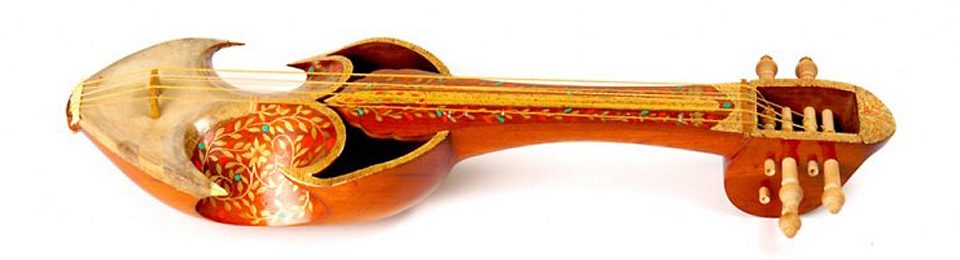
The Anād Foundation understands sūkham virsā — intangible heritage — as the subtle inheritance of memory, practice, knowledge, discipline, sound, gesture, language, technique, and transmission.
It is the heritage that cannot be preserved merely by locking an object in a cabinet. It lives in the voice, hand, ear, breath, memory, discipline, and embodied practice of knowledge-bearers.
A rāga survives when it is sung, taught, heard, remembered, and understood.
A tāla survives when it is recited, played, held in the body, and transmitted with discipline.
A craft survives when the hand still knows how to measure, cut, bind, carve, tune, dye, stitch, write, prepare, and repair.
A tradition survives when its method is not separated from its meaning.
What Intangible Heritage Includes
Anād’s work with intangible heritage includes:
- oral traditions and lineage-based pedagogy;
- rāga, tāla, repertoire, notation, and performance practice;
- Gurbāṇī Saṅgīt and the music of Srī Gurū Granth Sāhib;
- instrumental knowledge, luthiery, tuning, repair, and maintenance;
- calligraphic practice, scribal discipline, manuscript preparation, paper-making, ink-making, pigment preparation, and binding methods;
- language, dialect, pronunciation, interpretation, and oral commentary;
- oral histories of maestros, artisans, teachers, performers, instrument-makers, scholars, and hereditary knowledge-bearers;
- attire memory, turban-tying, drape, textile use, tailoring, and regional wearing practices;
- workshop methods, aesthetic judgement, hand-memory, and intergenerational transmission.
Why It Is Endangered
Intangible heritage often disappears silently.
A manuscript may survive, while the person who can read its notation has passed away.
An instrument may be displayed, while no one remembers how it was tuned or played.
A garment may be photographed, while the tailor who knew its cut and fold is gone.
A recording may exist, while its rāga, tāla, dialect, context, or pedagogical meaning remains unidentified.
The loss of intangible heritage is often not visible until it is too late. It is therefore urgent to document living memory while knowledge-bearers are still able to speak, teach, demonstrate, correct, and transmit.
Documentation of Living Memory
The Foundation’s intangible-heritage work may include:
- interviews and oral-history recordings;
- audio and video documentation of teaching, performance, craft, and demonstration;
- transcription, translation, transliteration, notation, and indexing;
- documentation of rāga, tāla, repertoire, technique, and pedagogy;
- mapping of lineages, teachers, instruments, manuscripts, and performance practices;
- study of craft processes, tools, measurements, materials, and embodied methods;
- preparation of teaching materials, publications, catalogues, and public-learning resources.
Gurbāṇī Saṅgīt and Living Transmission
A central part of Anād’s intangible-heritage work concerns Gurbāṇī Saṅgīt and the music of Srī Gurū Granth Sāhib.
This work includes the study and transmission of rāga, tāla, repertoire, notation, instruments, oral pedagogy, performance practice, textual discipline, historical sources, and associated craft traditions. It recognises that the musical heritage of Gurbāṇī cannot be reduced to performance alone; it is a living system of memory, discipline, language, devotion, artistry, pedagogy, and sound.
Craft as Intangible Heritage
Craft is not only a finished object. It is also a way of knowing.
The making of an instrument, the preparation of ink, the shaping of a nib, the burnishing of paper, the binding of a folio, the tying of a turban, the cutting of a garment, the tuning of a string, the preparation of leather, or the shaping of wood all carry inherited knowledge.
Anād therefore treats craft processes as intangible heritage, even when they produce tangible objects.
Knowledge-Bearers
The Foundation recognises the importance of aged maestros, artisans, scribes, calligraphers, instrument-makers, tailors, singers, percussionists, teachers, scholars, kathākār-s, sañthyā teachers, hereditary performers, and other knowledge-bearers.
Many such persons carry knowledge that is not found in books, institutions, or digital archives. Their memory must be recorded with respect, and where possible, their teaching and welfare must be supported during their lifetime.
Education and Transmission
Intangible heritage survives through transmission. Documentation is necessary, but not enough.
Anād may support classes, workshops, retreats, residencies, apprenticeships, fellowships, lecture-demonstrations, public-learning sessions, recordings, publications, and educational materials that allow knowledge to be practised and passed on responsibly.
The purpose is not imitation, but disciplined continuity.
Public Benefit
The Foundation’s work in intangible heritage is carried out for public charitable, educational, cultural, archival, research, and conservation purposes.
Its aim is to ensure that living knowledge remains available for students, researchers, practitioners, communities, institutions, and future generations.
Sūkham virsā survives when it is heard, practised, understood, respected, and transmitted.