Archival Review
This page preserves a review of Gurū Gaurav 350 by the late Professor Gajendra Narayan Singh, respected musicologist and cultural critic from Bihar.
The review is retained as part of The Anad Foundation’s archival record of the six-day commemorative festival presented in Patna in connection with the 350th Prakāś anniversary of Sāhib Srī Gurū Gobind Singh Ji.
The language, judgments, spellings, and critical voice of the review reflect the period and the author’s own perspective. The text has been lightly edited for spelling, readability, diacritics, and house-style consistency, while preserving the substance and tone of the original review.
A Glimpse of Jashn-e-Mehfil
Guru Gaurav: Celebrating the 350th Birth Anniversary of Sāhib Srī Gurū Gobind Singh Ji
A Review by Professor Gajendra Narayan Singh
From ancient times, Bihar has been a land of legends and luminaries who were torch-bearers in the fields of art, literature, culture, and religion. It was the birthplace of Gautam Buddha, Mahāvīr Tīrthaṅkar, Sufi saint Sarfuddin Ahmed Yahya Maneri, and the last Gurū of the Sikhs, Sāhib Srī Gurū Gobind Singh Ji.
Gurū Gobind Singh Ji was born 350 years ago at Azeemabad, Patna, as Gobind Rai, and became the Gurū of the Sikhs at the early age of nine. In course of time, he came to be popularly known as Gurū Gobind Singh. He was not only an extraordinary warrior, but also a poet, an accomplished musician, and a composer of Bāṇī.
Gajendra Narayan Singh at Gurū Gaurav
The people of Bihar have the distinct privilege of serving as custodians of Takhat Srī Patna Sāhib, the birthplace of Gurū Gobind Singh Ji, whose myriad accomplishments, strategic interventions, and sacrifices continue to inspire millions the world over. His contributions to cultural diversity with dignity are unparalleled.
To commemorate the 350th anniversary of his birth, the Government of Bihar, in association with The Anad Foundation, New Delhi, curated Gurū Gaurav, a six-day showcase — a Jashn-e-Mehfil — of musical and literary extravaganza, with particular focus on the expressive traditions of Bihar and Punjab. Select gharānēdār exponents of Hindustānī, Karnāṭak, and Gurbāṇī Kīrtan / Gurbāṇī Saṅgīt, as well as poets and scholars, converged at Shri Krishna Memorial Hall to offer their tribute to the illustrious Gurū Sāhib.
According to Gurū Gobind Singh Ji, music is intensely related to the human soul; it is not a charismatic game. It gives peace and tranquillity. So he says:
Jau tau prem khelan kā chāo, sir dhar talī galī merī āo.
Jis saṅgīt meṅ prem ke svar gūñjte haiṅ, vahī aham miṭātā hai. Guzarte dinoṅ meṅ rāga-raṅg hotā thā, jaṅg nahīṅ — un prastutiyoṅ meṅ prem aur karuṇā kā sansparś hotā thā jo śrotāoṅ ko vimugdh karke rūhānī khuśbū se antas ko labrez kar detā thā. Gurū Gobind Singh Ji aisā hī saṅgīt ke kamal the.
It is in this light that the six-day musical festival will be reviewed.
After a long time, the music-loving people of Bihar, and particularly Patna, as well as Sikh pilgrims from all over the world who came to Takhat Sāhib, Patna, to pay their respects and homage to the illustrious Gurū Gobind Singh Ji, had the opportunity to witness and listen to a grand musical soiree organised by Bhāī Baldeep Singh of The Anad Foundation, New Delhi, along with the Art and Culture Department, Government of Bihar.
Bhāī Baldeep Singh Ji has a unique personality, as he is not only an experienced organiser but also an accomplished musician. Probably for the first time, Patnaites listened to a galaxy of dhrupad singers of Bihar as well as well-known Ḍāgarvāṇī dhrupadiyās. Not only the dhrupad exponents of Bihar, especially Pandit Indra Kishore Mishra, who is the lone representative singer of the oldest existing dhrupad gharānā of Bettiah, but even the exponents of the Ḍāgar gharānā, Ustād Zia Mohiuddin Dagar and Ustād Zia Fariduddin Dagar, admired the rich tradition of the Bettiah gharānā.
Among the dhrupad singers of the Darbhanga gharānā, Pandit Raghuvir Mallick presented his ancestors’ khazānā — treasure — of bandiśes and received applause from the audience.
During the six-day Jashn-e-Mehfil, listeners enjoyed several notable performances. Rudra vīṇā playing by Ustād Bahauddin Dagar regaled the audience. More so, Pandit Ritwik Sanyal of the Ḍāgarvāṇī tradition also received applause from the listeners for his soulful rendition of alāpa. He very aptly rendered a cīz from Dasam Bāṇī of Gurū Gobind Singh Ji.
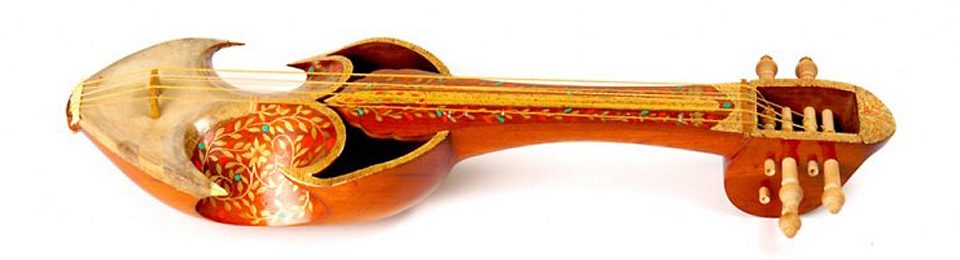
Perhaps for the first time, the listeners had the opportunity to listen to rabāb, a rare instrument, played by Ustād Daud Khan Sadozai. It was a rare treat and the listeners enjoyed it fully. Daud Khan kept the audience spellbound.
Among percussion instruments, the pakhāwaj has a rich tradition in Bihar. There are two distinct gharānās of pakhāwaj playing in Bihar — Darbhanga and Gaya. The representatives of both gharānās played according to their reputation. Both Sangeet Kumar Pathak and Ashutosh Upadhyaya handled and played their instruments quite well, but Ravishankar Upadhyaya was superb. He has excellent mastery over his instrument. The clarity of bols and their rendition were masterfully done.
Dr. Umayalpuram Sivaraman is one of the senior mridaṅgam players of Karnāṭak Saṅgīt. He has excellent mastery over his instrument. But his lengthy playing somehow disappointed the listeners. The time factor is very important where there are several artists to play and sing.
In between the musical renditions, there were a few poetry recitals and a very illustrative item presented by Dr. Ajit Pradhan, who read out his scholarly paper on Rāga Kathā — a guldastā of Gurū Gobind Singh Ji. Bhāī Baldeep Singh’s own poems, as well as select recitations from Dasam Bāṇī, regaled the audience.
The six-day musical extravaganza had several other items, such as ṭhumrī singing by Pandit Ram Kumar Mishra and sarod recital by Ustād Aashish Khan of the Senia-Maihar gharānā. Aashish Khan is the grandson of the legendary Ustād Baba Allauddin Khan of Maihar. But Aashish Khan’s playing was not up to the mark. He failed to show the glory and grandeur of his father Baba Allauddin Khan. In Aashish Khan’s sarod playing, the melodic content was disappointingly nil. By his playing, he rather proved that the sarod is a harsh and loud-sounding instrument. Ustād Roshan Ali is a well-known sāraṅgī player. He should have been given a chance to play solo.
Last but not the least, it is very difficult to sum up all the artists in a short and brief narration, i.e., review. One should conclude by throwing light on the virtuosity of Bhāī Baldeep Singh, who is an accomplished artist. Although he showed his skills by accompanying several artists on jōṛī very suitably and ably, on the last night of the six-day musical gala, Bhāī Baldeep Singh superbly regaled the listeners himself as a versatile vocalist.
He sang several compositions in Rāga Āsā. This particular rāga was especially dear to Gurū Nānak Dev Ji and is prominently associated with Srī Gurū Granth Sāhib. Bhāī Baldeep Singh’s voice is palledār, paṭdār, and at the same time sweet and sonorous, which was the main attraction of the show and captivated the audience till late night.
This six-day music samāroha, presented on the Gurū Parva from 31 December 2016 to 5 January 2017, will be remembered by listeners for many days to come.