The courses and learning streams of Anād Khaṅḍ are envisioned as part of The Anād Foundation’s wider work in education, heritage conservation, research, documentation, practice, and public learning.
Earlier Anād Conservatory proposals included structured long-term courses and diploma ideas connected with earlier site-specific plans. Those proposals remain part of the Foundation’s institutional history. The present framework is more flexible and may include classes, retreats, workshops, apprenticeships, study circles, public-learning modules, research training, online learning, and future certificate / diploma programmes subject to applicable approvals.
For legal, statutory, banking, tax, audit, CSR, and formal institutional purposes, the Foundation’s legal name is The Anad Foundation. The form Anād is used as the Foundation’s preferred cultural, scholarly, programme, publication, and public-facing style.
Learning Approach
Anād understands learning as transmission. It is not limited to classroom instruction, textbook knowledge, or performance training. It includes listening, practice, correction, repetition, documentation, memory, discipline, craft, fieldwork, research, and responsible engagement with living traditions.
The Foundation’s educational work may therefore take different forms:
- regular classes;
- online classes;
- retreats;
- workshops;
- lecture-demonstrations;
- apprenticeships;
- internships;
- residencies;
- public-learning sessions;
- research and publication training;
- archival documentation work;
- craft and instrument-study modules;
- field documentation and oral-history work.
Core Learning Areas
1. Gurbāṇī Saṅgīt and Music of Srī Gurū Granth Sāhib
Learning in Gurbāṇī Saṅgīt may include rāga, tāla, laya, repertoire, notation, vocal practice, listening, pedagogy, oral memory, pronunciation, textual care, historical sources, and the music of Srī Gurū Granth Sāhib.
Students may encounter both practice and study: singing, listening, notation, source-reading, rhythm, rāga-aṅg, repertoire, and the discipline of transmission.
2. Rāga, Tāla and Repertoire
The Foundation may offer learning connected with rāga, tāla, laya, melodic development, rhythmic awareness, repertoire, compositional forms, notation systems, oral pedagogy, and comparative study of South Asian musical traditions.
3. Instruments and Luthiery
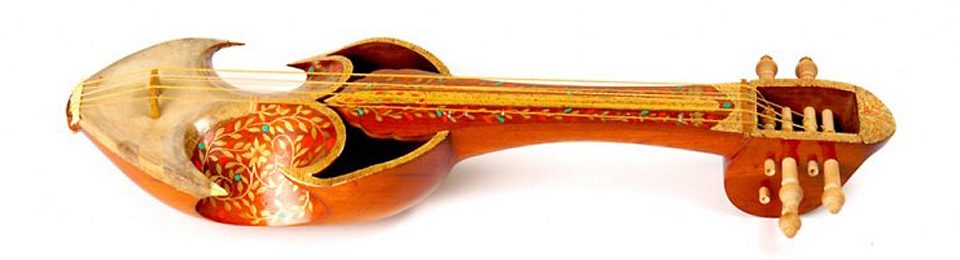
Courses or workshops may include exposure to heritage instruments such as rabāb, tāus, sarindā, jōṛī, pakhāwaj, mridaṅg, and related instruments.
Learning may include instrument care, tuning, playing awareness, material knowledge, documentation, repair, craft ecology, and luthiery traditions.
4. Manuscripts, Calligraphy, Paper, Ink and Binding
Subject to available teachers, resources, and project needs, Anād may support learning in manuscripts, calligraphy, scribal traditions, traditional paper-making, ink-making, pigment and colour preparation, binding, folio preparation, writing implements, burnishing, and related manuscript-craft knowledge.
5. Archives, Audio-Visual Restoration and Digital Preservation
Learning may include archival organisation, cataloguing, scanning, metadata, digitisation, audio-visual restoration, oral-history recording, file naming, backup systems, access copies, preservation masters, and documentation workflows.
6. Research, Publications and ARPO
Through Anād Research & Publications Office (ARPO), students and researchers may learn or assist with collation, editing, notation, indexing, translation, transliteration, proofreading, design coordination, scanning checks, catalogue preparation, research notes, and publication preparation.
7. Vernacular Skills, Crafts and Cultural Memory
Learning may also include vernacular skills and craft traditions, including woodworking, leatherwork, metalwork, string-making, textile memory, attire traditions, turban practices, phulkārī, hand-based knowledge systems, and documentation of endangered craft ecologies.
Modes of Study
Regular Classes
Regular classes may be offered in person or online, depending on the teacher, student level, subject, schedule, and institutional capacity.
Intensive Retreats
The Gurbāṇī Saṅgīt Intensive Retreats provide immersive study environments for practice, listening, discussion, repertoire, rhythm, notation, group learning, and individual correction.
Workshops
Workshops may focus on specific areas such as rāga, tāla, instruments, luthiery, calligraphy, archives, oral histories, manuscripts, photography, documentation, public learning, or craft traditions.
Apprenticeships and Internships
Some areas require longer engagement through apprenticeship, internship, volunteer work, or project-linked learning. These may include archives, documentation, publications, luthiery, audio-visual restoration, fieldwork, event support, and conservation-linked work.
Public Learning
Anād may also organise lecture-demonstrations, listening sessions, exhibitions, guided visits, public talks, seminars, and educational programmes for students, families, institutions, donors, and interested publics.
Future Structured Courses
The Foundation may, from time to time, develop structured courses, syllabi, certificates, diplomas, fellowships, residencies, or curriculum-based learning streams in areas aligned with its objects.
Where statutory recognition is required for any degree, diploma, certificate, accreditation, equivalence, or formal credential, the Foundation shall seek approval from competent authorities before representing such credential as officially recognised.
Pending such approval, the Foundation may issue internal certificates of participation, attendance, completion, training, proficiency, workshop completion, fellowship, internship, or apprenticeship, clearly indicating their nature, scope, and issuing authority.
Earlier Course Proposals
Earlier course outlines associated with the Anād Conservatory and earlier Anād Khaṅḍ proposals are retained as part of the Foundation’s institutional history. Their language, structure, duration, or site-specific assumptions may reflect the period in which they were first prepared.
The present page should be read as the current broad learning framework. Detailed schedules, admissions, fees, scholarships, eligibility, locations, teachers, and course-specific requirements may vary according to programme design, available resources, Board approval, and applicable law.
Who May Study
Anād’s learning streams may be suitable for:
- children and young learners;
- students and researchers;
- musicians and practitioners;
- teachers and educators;
- artisans and craft learners;
- heritage workers;
- archivists and documentation assistants;
- interns and volunteers;
- institutions and community groups;
- serious listeners and seekers of deeper study.
Participation may depend on preparation, suitability, available seats, teacher availability, discipline, schedule, location, and programme requirements.
Ethics of Study
Study at Anād requires sincerity, punctuality, practice, humility, respect, care for materials, and responsibility toward the tradition, teacher, fellow learners, archives, instruments, and public-interest purpose of the Foundation.
Learning is not treated as consumption. It is treated as participation in a living responsibility.
Enquiries
For enquiries about classes, retreats, workshops, internships, apprenticeships, research access, archival learning, or future course offerings, please contact The Anād Foundation.