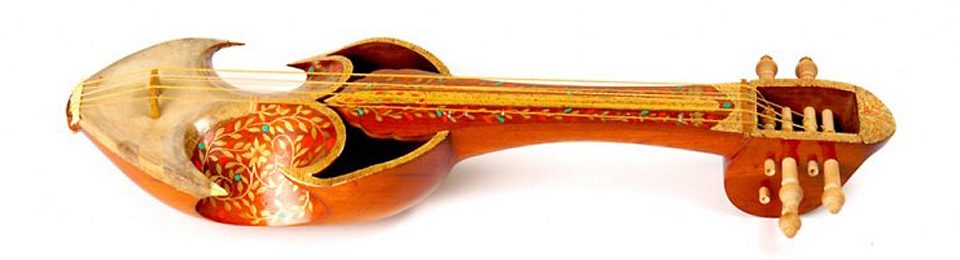
The Anād Foundation understands sthūl virsā — tangible heritage — as the material inheritance through which memory, knowledge, artistry, craft, discipline, and history become visible and touchable.
Tangible heritage includes buildings, objects, manuscripts, instruments, tools, photographs, recordings, artworks, textiles, paper, inks, bindings, archives, and other material forms that carry cultural memory.
But a tangible object is never only an object. It often carries the invisible memory of the people, practices, skills, and knowledge systems that created, used, repaired, preserved, and transmitted it.
What Tangible Heritage Includes
Anād’s work with tangible heritage may include:
- historic buildings, havelis, sarais, cultural sites, studios, learning spaces, and heritage environments;
- manuscripts, books, rare prints, folios, archival documents, calligraphic works, paper, inks, pigments, colours, and bindings;
- musical instruments such as rabāb, tāus, sarindā, jōṛī, pakhāwaj, mridaṅg, and related instruments;
- luthiery tools, stencils, templates, measurements, craft implements, and workshop materials;
- photographs, negatives, transparencies, films, audio tapes, cassettes, video recordings, field recordings, and digital media;
- artworks, textiles, attire, turbans, drape traditions, tailoring references, and craft materials;
- archives, collections, libraries, galleries, storage systems, catalogues, and conservation infrastructure.
Tangible Heritage as a Knowledge Anchor
Tangible heritage gives form to intangible memory.
A manuscript is paper, ink, script, binding, and folio structure — but it is also language, sound, interpretation, scribal discipline, and pedagogy.
A musical instrument is wood, skin, string, metal, glue, polish, and measurement — but it is also tuning, touch, repertoire, sound, and lineage.
A textile is cloth, fibre, dye, cut, stitch, and drape — but it is also region, identity, climate, labour, memory, and embodied wearing practice.
Anād therefore treats tangible heritage as an anchor for recovering larger systems of knowledge.
Preventive Conservation
Many heritage objects do not first need dramatic restoration. They need responsible care.
Preventive conservation may include:
- condition assessment;
- safe handling;
- proper storage;
- archival boxes and protective housings;
- climate awareness and humidity / temperature monitoring;
- pest-prevention measures;
- careful labelling and cataloguing;
- scanning and photographic documentation;
- digitisation and backup;
- trained custodial procedures.
Such work reduces damage before it becomes irreversible.
Manuscripts, Calligraphy, Paper, Ink and Binding
The Foundation’s tangible-heritage work includes manuscripts, books, calligraphic works, paper, inks, pigments, colours, bindings, writing tools, folio structures, and related materials.
These are not merely textual objects. They preserve scribal hand-memory, calligraphic discipline, craft recipes, material choices, aesthetic judgement, and the history of knowledge transmission.
Anād may support the conservation, documentation, digitisation, study, teaching, and revival of manuscript arts, calligraphy, traditional paper-making, ink-making, pigment preparation, stone, mineral and plant-based colours, paper-sizing, binding, burnishing, and writing implements.
Musical Instruments and Tools
Heritage instruments require care, documentation, repair, and use. An instrument that is left silent without study may become an exhibit, but not a living source.
The Foundation may conserve, restore, document, display, study, and support the making of traditional and heritage instruments. This includes attention to tools, measurements, materials, skins, strings, bridges, bows, stencils, wooden forms, leatherwork, metalwork, storage, and playing condition.
Such work connects the instrument to its craft ecology and performance tradition.
Archives and Recordings
Recordings, photographs, negatives, transparencies, cassettes, tapes, films, and digital files are also tangible heritage. They are vulnerable to decay, format loss, poor storage, technological obsolescence, and lack of cataloguing.
Anād’s work may include audio-visual restoration, digitisation, metadata preparation, backup systems, listening and viewing access, and contextual documentation.
The aim is not only to preserve media, but to recover meaning.
Historic Spaces
Tangible heritage also includes built environments: havelis, sarais, studios, learning spaces, archives, workshops, and cultural sites.
The Foundation’s approach to historic spaces is conservation-sensitive and evidence-led. It seeks stabilisation, documentation, careful repair, adaptive reuse, and public-interest development, rather than cosmetic renovation or tourism-led makeover.
A restored space should not become an empty shell. It should support learning, research, conservation, craft, documentation, and living transmission.
Collections and Custody
The Foundation may work with collections owned, loaned, deposited, donated, or placed in long-term custodial care. Such collections may include instruments, manuscripts, books, artworks, photographs, tools, textiles, recordings, films, digital archives, and related materials.
Where materials are received on loan or permanent custodial loan, ownership, lender conditions, conservation requirements, access policies, and documentation protocols must be respected.
Public Access
Tangible heritage held for public benefit should become available for learning, research, and responsible access where appropriate. Such access may include exhibitions, guided visits, student sessions, study access, catalogues, publications, digital resources, viewing stations, listening sessions, and public programmes.
Access must always be balanced with conservation needs, copyright, cultural sensitivity, privacy, security, and lender conditions.
Living Responsibility
Sthūl virsā is not valuable merely because it is old. It is valuable because it carries memory, skill, discipline, history, beauty, and knowledge.
The purpose of conserving tangible heritage is to ensure that objects can continue to speak — through research, teaching, interpretation, careful use, and responsible public engagement.
Heritage survives when material memory and living knowledge remain connected.