The Anād Foundation is a public charitable trust established in New Delhi for the conservation, documentation, research, education, publication, and living transmission of cultural heritage.
For legal, statutory, banking, tax, audit, CSR, and formal institutional purposes, the Foundation’s legal name is The Anad Foundation. The form Anād is used as the Foundation’s preferred cultural, scholarly, programme, publication, and public-facing style.

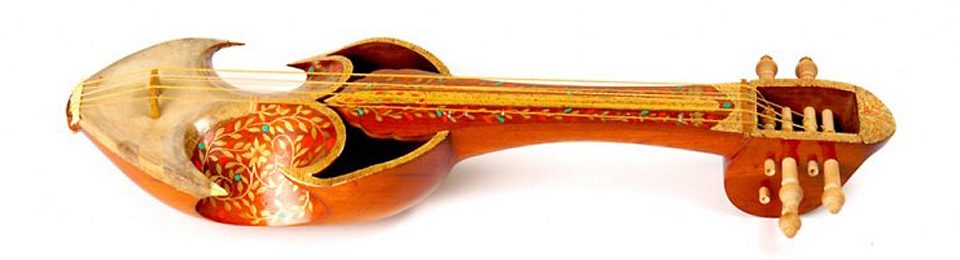
The Foundation works with both sthūl virsā — tangible heritage — and sūkham virsā — intangible heritage. Its work includes manuscripts, musical instruments, archives, recordings, photographs, books, artworks, tools, textiles, craft traditions, oral histories, pedagogical lineages, performance practices, and the embodied knowledge of living practitioners.
Anād understands culture not as a dead fossil of the past, but as a living continuity across past, present, and future. Heritage is not preserved merely by storing objects; it is sustained when knowledge is researched, documented, practised, taught, interpreted, shared, and transmitted with integrity.
Our Work
The Foundation’s work includes:
- Heritage conservation and documentation
Preventive conservation, archival care, cataloguing, digitisation, audio-visual restoration, manuscript documentation, and the safeguarding of vulnerable cultural materials. - Gurbāṇī Saṅgīt and the music of Srī Gurū Granth Sāhib
Research, teaching, documentation, notation, publication, and transmission of the historical rāga-tāla systems, repertoire, instruments, pedagogy, and associated craft traditions of Gurbāṇī Saṅgīt. - Musical instruments and craft traditions
Research, documentation, conservation, revival, and making of heritage instruments and associated skills, including woodworking, leatherwork, string-making, tool-making, and luthiery practices. - Archives, publications, and research
The Foundation supports research, editing, notation, indexing, publication preparation, scanning, translation, transliteration, and dissemination through Anād Research & Publications Office (ARPO) and related initiatives. - Education and public learning
Classes, retreats, workshops, lecture-demonstrations, public programmes, student learning, fellowships, apprenticeships, and future curriculum-based initiatives in areas aligned with the Foundation’s charitable objects. - Tangible and intangible heritage spaces
Conservation-sensitive development of archives, learning spaces, displays, galleries, workshops, and heritage-transmission centres where objects, practice, memory, and scholarship can be brought together. - Health-care, welfare, and humanitarian work
Public-interest health-care, healing, welfare, and humanitarian initiatives, including Punj-Care Initiatives, which began with oral-health and dental-care outreach for underserved communities and may expand into broader health-access programmes.
Living Heritage
Anād’s work is rooted in the belief that living traditions cannot be reduced to display objects, stage events, or decorative memory. A manuscript must be read and understood; an instrument must be heard and maintained; a rāga must be taught; a craft must remain in the hands of practitioners; a recording must be restored and made meaningful; a tradition-bearer must be respected while living, not merely commemorated after loss.
The Foundation therefore works toward the recovery, consolidation, and renewal of heritage assets — both material and immaterial — so that they remain available for research, education, artistic practice, community memory, and public benefit.
Institutional Approach
The Anād Foundation works through documentation, analysis, conservation, education, publication, and dissemination. Its projects are designed to be research-led, accountable, and public-interest oriented.
The Foundation collaborates with scholars, artists, conservators, educators, artisans, subject experts, institutions, donors, CSR contributors, volunteers, and community stakeholders who share concern for the safeguarding and transmission of cultural heritage.
Anād seeks to build an institutional framework where heritage is not merely remembered, but responsibly carried forward.
Principle-centred leadership of Bhai Baldeep Singh, what an inspiration! Someone said that the only thing that endures over time is the ‘law of the farm’.
Prepare the ground
Put in the seed
Cultivate it
Weed it
Water it
then gradually nurture growth and development of full maturity.