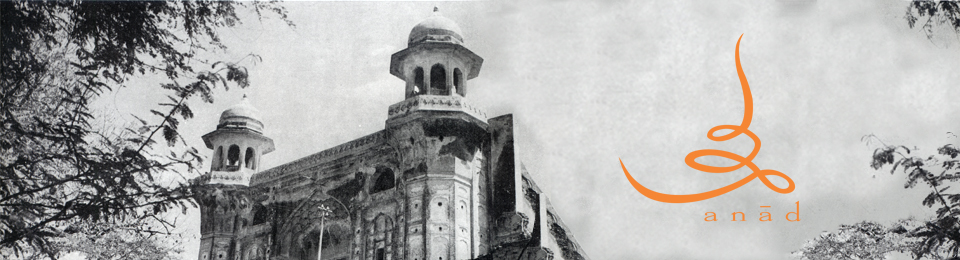
Bhāī Baldeep Singh is striving to re-establish the Dharamsāla founded in 1521 by Gurū Nanak at the site of this thematically selected Qila Sarai, in the interim continuing to train a new generation of custodians of the Gurbāṇī Saṅgīta Paramparā through the indigenous pedagogical process he recovered at bi-annual intensive twelve-day retreats he has conducted in North America, Europe, and India since 1998.
“Convening in January and July across the globe—from Española to Sultanpur Lodhi, from Perugia to San Francisco—these courses have initiated a remarkably diverse saṅgat into what survives of the field of GurSikh sacred music—including its original rāgas, tālas, exegesis, instrumentation, pedagogy, oral narratives, performance history, improvisational approaches, aesthetic analysis, etiquette, and repertoire. Beyond imparting experiential knowledge and historical context regarding the core GurSikh spiritual practice to scholars and practitioners alike, the retreats have funded the responsible documentation of the very elders who have carried memories of the Gurū-s’ kīrtana to our century.”
Nihal Singh
https://www.vitalanjan.com/journal/the-gurus-singing-mule-part-i/
——
“Students at the twelve-day intensive Kīrtana retreats wake up in the Aṁrita Velā to begin riyāz on “sā” and gradually work on the aroha (ascending) and avaroho (descending) scales along with saragama-s and ṭīkā-s. The rest of the day may be spent on elaborating a rāga-’s alāp, learning Sabada rīta compositions, memorizing Bāṇī, or working on pronunciation, with the evenings reserved for tāla practice. Nevertheless, the course trajectories are ultimately dictated by the teacher, where entire days may be spent on a single ṭīkā, saragama, or Sabada, with emphasis being placed on the seven fundamentals: sura, rāga, laya, tāla, Sabada, varana, and rasa ātmak rendition.”
Dr. Nirinjan Kaur Khalsa-Baker
https://www.vitalanjan.com/journal/the-gurus-singing-mule-part-i-5/
__
“Arguably, the most important experience is not only that of being able to sing purātan śabad rīts, but the ability to listen to and become a living receptacle of knowledge. Over the years, students acquire the capacity of hearing the subtleties that make long-forgotten rāgas, tālas, and song forms humanity’s precious intangible heritage. Since 1997, the story of the Gurbānī Sangīta retreats continues to unfold through an uninterrupted flow of notes and beats that, merging into one another, revive the ‘uncolonized songs’ and, in turn, let resonate the aural memory of Gurbānī Kīrtana in the present.”
Dr. Francesca Cassio
https://www.vitalanjan.com/journal/the-gurus-singing-mule-part-i/
 The Anād Foundation