• About The Anād Foundation
    • Aims & Objectives
    • Governance
    • Trustees & Associates
    • Historical Records
      • Founder Trustees
        • Bhāī Baldeep Singh
          • First visit to the Qila
        • Chiranjiv Singh
        • K. T. S. Tulsi
        • Kiranjit Singh Bawa
        • Manjit Kirpal Singh
        • Pervinder Singh Chandhok
        • Raj M S Liberhan
        • Ranjodh Singh
        • Ravinder Singh Ahuja
      • Board of Advisors
        • Rear Admiral Kirpal Singh (Retd.)
      • Associate Trustees 2008-2011
      • Associate Trustees 2011-2014
      • Associate Trustees 2014-2017
        • Mayank Singh Bawa
      • Associate Trustees 2017-2020
      • Associate Trustees 2020-2023
    • Team & Project Associates
    • Financial Highlights — Archival Record
  • Anād Khaṅḍ / Conservatory
    • Anād Khaṅḍ — The Proposal
    • The Institute
      • Faculty
        • Resident Faculty
        • Visiting Faculty
      • Learning Streams
        • Class With Bhāī Baldeep Singh
        • After-School Studies
          • AAS Study Programme Coordination Committee Meeting I & II
      • Workshops
        • Gurbāṇī Saṅgīt Workshops
          • With Bhai Gurcharan Singh
          • With Bhai Baldeep Singh
            • BBS I
          • With Ustad Harbhajan Singh Namdhari
        • Dance Workshops
          • Kathak with Maria Maurizia Costanzo
            • Maurizia’s Workshop Note
            • Gallery
          • Chhau Dance with Luisa Spagna
            • A Note by Luisa Spagna
        • Theatre Workshops
          • With Kuljeet Singh
            • Theatre in the spaces
            • Gallery
        • Photography
      • Outreach
        • 2018: Poznań, Poland
        • 2019: Poznań, Poland
        • 2025: Rovigo, Italy
      • Gallery
    • ANĀD Scientific Advisory Committee 2009-2017
      • First Thoughts
        • By Professor Paolo Ceccarelli
        • By Professor Rabindra Vasavada
        • By Ashok B Lall
    • Costs and Funding Framework
    • Luthiery School
      • Rabāb
        • Harbhajan Kaur’s Rabab
      • Saranda
      • Taus
    • Audio-Visual Restoration Studio
  • Gurū Gaurav 350
    • Guru Gobind Singh — A Prophet With Difference
    • Gurū Gaurav — A Concept Note
    • Gurū Gaurav — Press Release
    • A glimpse of Jashn-e-Mehfil
    • Performers
      • Rânsubāi
        • Inauguration
        • Raghuvir Mallik
        • Sangeet Kumar Pathak
        • Bibi Ashupreet Kaur
        • Ashutosh Upadhyay
        • Dr. Alankar Singh
        • Vidushi Jyoti Hegde
        • Bhai Baldeep Singh
        • Pandit Ram Kumar Mallick
        • Bhai Balbir Singh Ragi
        • Bhai Baldeep Singh —Poetry Reading
        • Pandit Rajendra Gangani
        • Pandit Yashpaul
        • Mohan Shyam Sharma
        • Jagat Narayan Pathak
        • Nihal Singh
        • Indra Kishore Mishra
        • Dr. Anil Chaudhary
      • January 1, 2017
        • Guru Gaurav Event Hosts
        • Introductions
        • Pandit Ravi Shankar Upadhyay
        • Dr. Ajit Pradhan
        • Dr. Nirinjan Kaur Khalsa
        • Ustad Asheesh Khan
        • Poet Kulwant Singh Grewal
        • Bhai Baljit Singh Namdhari
      • January 2, 2017
        • Dhaddi Desraj Lachkani
        • Poet Jaswant Singh Zafar
        • Parminder Singh Bhamra
        • Manu Seen
        • Shekhar Sen
        • Pandit Prem Kumar Mallick
      • January 3, 2017
        • Nashir Naqvi
        • Pandit Uday Kumar Mallick
        • Baha’ud’din Dagar
        • Vidushi Gopika Varma
        • Pandit Vinod Pathak
        • Jasbir Jassi
      • January 4, 2017
        • Pandit Ram Prakash Misra
        • Manganiārs
        • Samiran Sanyal
        • Dr. Gurinder Harnam Singh
        • Sukhwinder Amrit
        • Suvir Misra
        • Dr. Madan Gopal Singh
      • January 5, 2017
        • Jago Tareenjan Group
        • Dr. Francesca Cassio
        • Ustad Daud Khan Sadozai
        • Songs of the Khalsa
        • Dr. Ritwik Sanyal
        • Dr. Umayalpuram Sivaraman
        • Dr. Surjit Patar
        • Bhai Baldeep Singh —Gurbāni Pade
    • Production Team
  • Heritage Conservation
    • Intangible Heritage — Sūkham Virsā
      • Luthiery Tradition
    • Tangible Heritage — Sthūl Virsā
      • Qila Sultanpur Lodhi
        • Lahore Gate
          • Heritage Hammered by IP Singh
        • Darbar Hall
        • Old Kacchehri (Colonial structure)
        • Delhi Gate
        • Mosque
        • Qila Walls
    • Technology Partners
  • Punj-Care Initiatives
  • Events
    • Full Moon Events
      • May 2011
        • 6th Kāv Tarang Review
      • September 2011
        • Gallery
      • February 2012
      • October 2012
        • October 2012 Punya Baithak Gallery
        • 2012 10 29 Punyā Baithak Press Reviews
    • Poetry Festivals
      • 7th Anād Kāv Tarañg
    • Theatre
      • Story-telling by VK
    • Archives
    • Laya Darshan: Revealing the Riches of Indian Rhythm
    • Jashan 2006
    • 2008 Dharati Suhāvī
    • 2013 Harī Rāgu Gāthā: 31-Rāgu in Gurbāṇī
    • 2014 Hari Rāgu Gāthā: Singing of 31 Rāg in Gurbāṇī
    • Jashan 1915-2015
    • Gurū Nānak Dēv 550th
    • Virtual Vaisākhī 2020
    • 2020 Rai Radio3 — Dharati Suhāvī
    • 2020 Expressions on Nature: Dharati Suhāvī
  • Anād Awards
    • Award Jury
    • Anād Sanmān
      • Jashan 2006
        • Review
    • Kāv Sanmān
      • 2008
        • 2008 Review
      • 2009
        • 2009 Review
      • 2010
        • 2010 Review
  • Study at Anād
    • Gurbāṇī Saṅgīt Retreats
      • Retreat 25: Merced, California January 2010
        • Gallery
      • Retreat 26: London, Ontario
      • Retreat 27: Tucson Arizona January 2011
        • Love Poem
        • Gallery
      • Retreat 28: Espanola, New Mexico, July 2011
        • Amrita Kaur Khalsa
        • Gurkaran Singh
        • Guru Mander Kaur
        • Gurumukh Singh CPA
        • Harbhajan Kaur Khalsa
        • Keerat Kaur Chahal
        • Nihal Singh
        • Nirvair Kaur
        • Raviraj Singh
        • Siri Sevak Kaur Khalsa
        • Gallery
      • Retreat 29: London, Ontario 2011-12
        • Student Reviews
          • Keerat Kaur I
          • Keerat Kaur II
          • Baljinder Singh Bassi I
          • Baljinder Singh Bassi II
          • Baljinder Singh Bassi III
          • Tanvir Singh Suri I
          • Tanvir Singh Suri II
          • Harkamal Singh I
          • Raviraj Singh I
      • Retreat 30: Qila, Sultanpur Lodhi 2012
        • Concert inside Kapurthala’s Modern Reform Centre, February 18, 2012
        • Mid-term Review by Nirvair Kaur
        • Review by Nadar Nihal Singh
      • Retreat 31: Albuquerque, NM
        • Nirvair Kaur’s Review: 31st Albuquerque Summer Kirtan Course
        • Keerat Kaur’s 31st Summer Retreat Review
      • Retreat 32: Mississuaga, Ontario
        • Keerat Kaur’s Course Review
      • Retreat 40: Albuquerque, New Mexico
        • Gurbani Sangeet Retreat Review: Nihal Singh
      • Retreat 42: Rajgir, Bihar
      • Retreat 48th: New Delhi
      • Retreat 51: Online from Anād HQ
      • Retreat 52: Online from Anād Foundation HQ
      • Retreat 53: Rochester, MN
        • Rochester Preview & Screenshots
      • Retreat 54: Seattle, WA
      • Retreat 55: Seattle, WA
      • Retreat 56: San Francisco, California
      • Retreat 57: Surrey, BC
      • Retreat 58: San Francisco, California
      • Retreat 59: Khalsa Centre, Canada
    • Anād Online Classes Log
    • Internship Programmes
      • Vasant Valley School Class XI 3-week Internship 2012
        • Chairman’s letter to Vasant Valley School Internship Students
        • Delhi Head Office – Tentative Schedule
        • Student Reviews
          • Anmol Handa
          • Himmat Singh Guram
          • Kavya Rai
          • Luigi Hari Tehel Singh
          • Uday Talwar
          • Wanhee Ji
        • Vasant Valley School 2012 Internship – Images 1 – Delhi
  • YaarAnād
  • Contact Us
  • Donate / Support Anād
  • YaarAnād Virtual Baiṭhaks
    • YaarAnād Virtual Baiṭhak – Season I
      • 2020 April
      • 2020 May
      • 2020 June
      • 2020 July
      • 2020 August
      • 2020 September
      • 2020 October
      • 2020 November
    • YaarAnād Virtual Baiṭhak – Season II
      • 2020 December
      • 2021 January
      • 2021 February
      • 2021 March
      • 2021 April

The Anād Foundation

~ Culture | Conservation | Continuity

The Anād Foundation

Monthly Archives: May 2013

Punya Baithak Series V – Raga Gujri: A Report (Punjabi Vernacular)

30 Thursday May 2013

Posted by Anād Foundation in ANAD Events, ANAD Khand, Press, Rāngli Sath

≈ Leave a comment

Dear Friends of Anad,
On Saturday May 25, 2013, some of the finest poets of Punjab read and sang their poetry as part of the 10th Anad Kav Tarang. Celebrated poet, Surjit Patar, presided over the poetry festival, which was also attended by Professor Kulwant Singh Grewal, Chann Momi, Rocky, Gurcharan Takhatar, Jasbir Singh Wattanvali, Roop Daburji, Surjit Sajan, Varinder Shelly, Harpreet Singh Kahlon and others.

Bhai Baldeep Singh sang the fifth raga of Guru Granth Sahib, Gujri, starting his recital with a brief alapa of the raga. He followed it with a dhrupad genre composition of Bhagat Trilochan, Ari Bai Gobid Naam Matt Bisarai, set to chartal – a 12-beat rhythmic cycle. Parminder Singh Bhamra, who has just recently joined the Anad Conservatory as an Assistant Pakhawaj-Guru, ably accompanied Bhai Sahib. Luigi Hari Tehel Singh (16) played the dhrupadi rabab while Bikramjit Singh accompanied on the dilruba. Jatinder Singh, a research scholar at the Guru Nanak Dev University, Amritsar, and Jugraj Singh played the tanpuras.  

A report by Narinder Sonia carried in Punjabi vernacular, Daily Ajit, on May 29, 2013.

2013 05 29 Ajit Punya Baithak Gujri

Image

Punya Baithak 31-Raga Series V – Raga Gujri

24 Friday May 2013

2013 0505 YaarAnad Newsletter Gujri

Posted by Anād Foundation | Filed under ANAD Events, ANAD Khand, ANAD Poetry Page, Rāngli Sath

≈ Leave a comment

A day with Bhai Balbir Singh Ragi (1998)…

24 Friday May 2013

Posted by bhaibaldeep in People, Photos

≈ Leave a comment

img587 Edit

There was a funny President of DSGPC in 1998 and he would not allow us to film at the Damdama Sahib Gurudwara, Nizamuddin East. Raghu Rai and his wife Gurmeet Rai, then a dear friend, gave us space to film my documentary “The Sacred Music of the Sikhs” for a couple of days. They lived near Khan Market in those days.

Gurliv Singh has volunteered 6 months for Anad and among the transparencies and negatives he has been scanning, I found this image.

National Akademi of Music, Dance & Drama Awards Programme

21 Tuesday May 2013

Posted by Anād Foundation in ANAD Discussion Forum, People, Press

≈ Leave a comment

The Sangeet Natak Akademi awards will be conferred by the Honorable President of India, Sri Pranab Mukherjee, on May 28, 2013, followed by the performances of the awardees.

SNA Awards 2012 Programme Card III SNA Awards 2012 Programme Card II SNA Awards 2012 Programme Card I

Punyā Baithak V – Rāga Gujri

19 Sunday May 2013

Posted by Anād Foundation in ANAD Events, ANAD Khand, Rāngli Sath

≈ Leave a comment

Anād Foundation marks 2 years at the Qila Sarai, Sultanpur Lodhi albeit without electricity 😉

Please do join us and contribute:

2013 05 25 Punya Baithak May Invite I 2013 05 25 Punya Baithak May Invite II 2013 05 25 Punya Baithak May Invite III 2013 05 25 Punya Baithak May Invite IV


Punya Baithak III – Raga Gauri

08 Wednesday May 2013

Posted by Anād Foundation in ANAD Events, Rāngli Sath

≈ Leave a comment

Tags

baldeep, bhai, dhrupad, dhurpad, Gauri, gurbani, images, kirtan, love, pakhawaj, raga, raga gauri, singh

Raga Gauri, Punya Baithak III of March 27, 2013: Images by Gurliv Singh

DSC_9140 DSC_9143 DSC_9145 DSC_9146 DSC_9160 DSC_9168 DSC_9170 DSC_9171 DSC_9175 DSC_9176 DSC_9180 DSC_9190 DSC_9193 DSC_9194 DSC_9196 DSC_9199 DSC_9200 DSC_9203 DSC_9205 DSC_9207 DSC_9211 DSC_9212 DSC_9213 DSC_9216 DSC_9249 DSC_9255 DSC_9262 DSC_9299 DSC_9309 DSC_9331 DSC_9335 DSC_9350 DSC_9370 DSC_9378 DSC_9383 DSC_9389 DSC_9399 DSC_9417 DSC_9419 DSC_9421 DSC_9440 DSC_9450 DSC_9462 DSC_9476 DSC_9483 DSC_9515 DSC_9582 DSC_9706 DSC_9719 DSC_9751 DSC_9768 DSC_9780 DSC_9783

Image

Punya Baithak at the Qila IV: Raga Asa – Press

07 Tuesday May 2013

Punya Baithak at the Qila IV: Raga Asa - Press

A report carried in Punjabi vernacular, Daily Ajit.

Posted by Anād Foundation | Filed under ANAD Khand, Press

≈ Leave a comment

Image

Sangeet Natak Akademi Audition Committee: Guru-Shishya Parampara

06 Monday May 2013

Sangeet Natak Akademi Audition Committee: Guru-Shishya Parampara

Press Report by Narinder Sonia

Posted by Anād Foundation | Filed under ANAD Khand, Press

≈ Leave a comment

Call For Papers: Hermeneutic and Aesthetic Perspectives on Sikh Musicology

06 Monday May 2013

Posted by Anād Foundation in ANAD Discussion Forum

≈ Leave a comment

This is to invite scholars to write papers for the referred journal published by Center on Studies in Sri Guru Granth Sahib, Guru Nanak Dev University, Amritsar, which I have been invited to edit. Depending on the number of quality papers, I will decide to have multiple editions of the journal. The ambit (Suggested Themes) is quite large but I guess that is from where I begin.

PDF Download:

2013 Call For Papers – Perspectives on Sikh Musicology

2013 GNDU Logo

Hermeneutic and Aesthetic Perspectives on Sikh Musicology

Call for Papers

Journal Perspectives on Guru Granth Sahib, Volume 8, No. 1, 2013, Center on Studies in Sri Guru Granth Sahib, Guru Nanak Dev University, Amritsar, Punjab – 144001 (India).

Concept Note

The waters of Sindhu, Saraswati, Beas, Satluj, Ravi, Chenab and Jhelum have long flowed through Punjab (erstwhile Sapt-sindhu) playing host to the writing of some of the most important scriptures, poetry, love ballads and vaars (odes of valour) as well as the evolution of some of the finest musical concepts. Even in the last millennium, in spite of the invasions that plagued this land of five rivers, Punjab, some of the finest music and literary works continued to be produced by the Sufi masters, Bhakti Marg exponents and the Guru-Sikh tradition.

The socio-cultural fabric of South Asia was ripped apart, perhaps like never before. The worst tragedy to befall this land was the partition, done in the name of religion in 1947 and then came further setbacks with further partitions made in the name of imaginary linguistic divides. Indigenous banks of ancient knowledge as well as vernacular pedagogical streams were first disregarded and later decimated. Some of the finest exponents such as Bhai Batan Singh of Mehli, Bhai Harnam Singh of Thatha Tibba, Bhai Dal Singh of Lasada, Bhai Naseera, Bhai Santu and Bhai Arjan Singh Tarangar, all died in anonymity.

The culture of wandering across scriptures and regions created a phenomenon of cross-pollination between cultures, religions, and across eras. Sadly this milieu in which wanderers acted was also lost. Would it then be correct to surmise that cultural pollution and cultural hegemony replaced cultural pollination when local dialects and music were irretrievably shoved towards extinction? A musical rendition was an idea of journeying say, for example, from an ignorant to an awakened state of being. Seekers of knowledge used to travel but nowadays only performers do. Would this be the essential reason why the idea of such journeying, both for the performer and the listener, went missing?

In the 15th-16th century, an udasi, a traveler extraordinaire, Guru Nanak brought the music of the Sufi masters, Bhakti Marg exponents and his own together maintaining them all in his pothi (collection of hymns). It needs to be explored if he gathered only the verses or also the original music of the respective authors. Subsequently, the works of his succeeding guru-lineage and that of their disciples was compiled and edited in 1604 AD as Adi Granth by Guru Arjan Dev, fifth Sikh guru. Guru Gobind Singh, the tenth Sikh Guru, gave the final shape by adding the Bani of the ninth guru, Guru Teg Bahadur, and ordained it as the living guru calling it Guru Granth Sahib (1708). Uniquely, the whole of Guru Granth Sahib or its content, Gurbani, is indexed in 31 ragas, with many of them perhaps rarely sung such as raga-s vadhans, tukhari, majh, nat-narayan, mali gaura and gauri-bairagan.

Gurbani Sangeet includes the performance of Gurbani Kirtan as well as the art of making and playing techniques of instruments used in the Sufi, Bhakti and Gur-Sikh traditions. Gurbani Kirtan is mutualism of four elements, namely, raga, tala, shabad and surti/chitt. Although all streams of Gurbani Sangeet are studied and perfected independently, they developed as parts of an organic whole rather than as separate streams necessarily signifying, perhaps, the interdependent nature of the music-word-art-instrument dimension.

The four vani-s of Dhrupad have academically been well attended to, but the reservoir of Gur-bani Kirtan is yet to be fully explored. Although following the socio-political upheavals that plagued South Asia in the first part of the 20th century many art forms were lost, we are still fortunate to have a significant repertoire of this tradition available to us. Notably, the two volumes# containing 497 vintage compositions (shabad reet-s) by the two brothers, Bhai Avtar Singh (1926-2006) and Bhai Gurcharan Singh (b. 1915), the 11th generation exponents of an unbroken tradition of Gurbani Kirtan, was the result of an effort to locate and document the original Gurbani Kirtan repertoire.

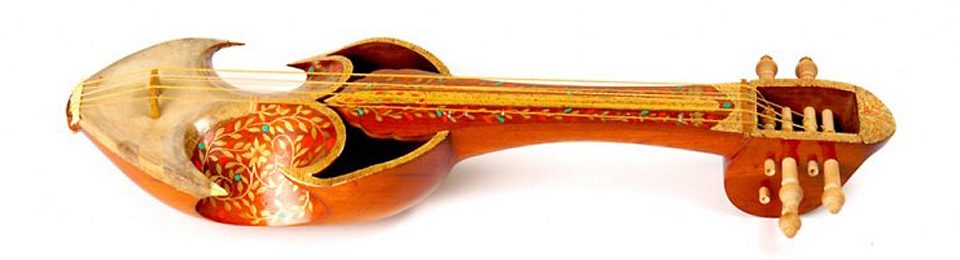
Gurbani is indexed in ragas but does not speak of music as such, that is, the raga forms are not stated nor any notations are given. We, the researchers, will have no other option but to rely on the memory carried on by the oral traditions. Before the partition of Punjab in 1947, the Muslim bards known as the Rababi-s also used to perform daily at the Sikh shrines. They had been doing so since the very first guru, Guru Nanak Dev’s times (1469-1539), until the partition when most of the Rababi-s migrated to the newly formed Islamic Republic of Pakistan. No known effort was made by anyone to document the repertoire of the Rababi-s, be it their knowledge of the string instruments played in the Gurbani Kirtan tradition, namely dhurpadi or Hindustani Rabab, saranda, pakhawaj, jori, and taus, or their musical repertoire. The works of Bhai Avtar Singh and Bhai Gurcharan Singh gain more significance for the reason that it was the first conscious attempt by a University to academically seek and document the vintage repertoire.

The authors of Gurbani lived in various regions of South Asia between the 12th and the 17th centuries. Gurbani is written in nearly two-dozen languages and over a hundred dialects; likewise, its authors belonged to different eras and regions ensuring musical diversity in terms of genres and musical instruments. In addition to learning about all of these, we would also be interested to learn about the impact of pre-existing musical systems on the tradition of Gurbani Kirtan and the impact of Gurbani Kirtan, if at all, on the music that existed at the time of Gurbani authors and in later periods.

The study of the music of India has been, in some way, incomplete for perhaps the largest compilation of classical music of South Asia, Gurbani Kirtan, has not been studied alongside and in detail. Recently, there have been worthy attempts at establishing Gurbani Sangeet (or Gurmat Sangeet) as an independent subject at some academic institutions in India and abroad where study chairs on the subject have been set up in the last decade. An analysis, however, of all that is still left in the extant memory of the tradition is yet to be attempted. The key may lie in gaining a comprehensive understanding of the memory of the tradition of Gurbani Sangeet: studying its repertoire, its heritage, its instruments rather than only creating a contemporary body of work unrelated to how Kirtan has been sung over the last few centuries. Studying Indian music and Gurbani Sangeet in isolation and independent of each other may not be enough. It is hoped that this journal will serve as an essential contribution to the field.

Suggested Themes: Scholars are invited to focus upon four areas, namely: Gurbani Kirtan period (12th-17th century); non-Gurbani Kirtan related music, musicians and texts (12th-17th century); Pre-Gurbani Kirtan period; Post-Gurbani Kirtan period (advent of newer musical forms and instruments, decline of musical genres such as alapa, dhrupad, dhamar, (their) grammar as well as musical instruments, such as dhurpadi rabab, taus, saranda, and revival of some the lost traditions and intangible heritage treasures. Contributions in any of the following perspectives and categories are invited: 

History      Aesthetics       Hermeneutics       Musicology       Luthiery

  1. Music related scriptures of South Asia such as Natyashashtra, Dattilam, Sangeet Ratnakar and so on.
  2. Musical genres and exponents (such as Nayak-s and Kalavant-s) of South Asia between 12th and 18th centuries.
  3. Comparative research work and studies on the traditions of devotional music and dance forms of South Asia in particular such as the four Vani-s namely, Khandar, Nauhar, Dagur and Gaubarhar, Qawwali, Haveli Sangeet, Carnatic Sangeet, Sufi music, dance forms such as Kathak, Kathakali, Bharatnatyam, Orissi, Chau, Mohinyattam; musical genres such as dhrupad, chantt, khayal, tappa, ghazal and so on including the advent and usage of musical instruments.
  4. Pre-Gurbani music of South Asia including Church music, sacred music of the four Jewish communities of India namely, the Bene Israel, the Jews of Cochin, the Baghdadi Jewish Community of Calcutta and the Bnei Menashe.
  5. Exploring the idea of laya (rhythm) in music.
  6. Music in Guru Granth Sahib: Raga-s and raga forms; Genres such as chantt, pade, tuke, vaar, ghorian, allahunian, etc.; Explanation of terms sometimes musically associated such as Ghar, Numerical insertions such as in Raga Gauri; Rag-mala; Musical affiliations of the respective Gurbani authors; Luthiery: Musical instruments of Gurbani Sangeet – the tools, luthiery traditions, playing techniques, contemporary efforts at the revival of instruments; Kirtaniye, Rababi-s musicians, luthiers, writers, communities and other contributors who served the field since guru times till present; The concept of revival in Gurbani Sangeet; The Kirtan tradition at the five Takhats, namely, Sri Akal Takhat, Sri Keshagarh Sahib, Sri Damdama Sahib, Sri Patna Sahib and Sri Hazur Sahib, respectively, and other significant Gurudwaras.

Aim

By way of the referred journal (Journal, Perspectives on Guru Granth Sahib, Volume. 8, Number 1, 2013) and the proposed seminar, we would like to invite papers that will not only help us to engage in an in-depth study on the tradition and discipline of Gurbani Sangeet but also explore the music of the lands and traditions wherefrom the authors of Gurbani hailed.

Format:

  1. Language of Publication – English.
    Scholars, especially from Punjab, are encouraged to write in their native languages namely, Punjabi and/or Hindi. The papers in vernacular will subsequently need to be translated in to English for publication.

Committee 

  1. Editor: Bhai Baldeep Singh, Visiting Professor, Division of Musicology of Sri Guru Granth Sahib.
  2. Editorial Board: Prof. Balwant Singh Dhillon, Dr. Bhai Harbans Lal, Dr. Gulzar Singh Kang, Dr. Jaspal Kaur Kang, Dr. Jagbir Singh.
  3. Five member anonymous review committee.

Deadlines:

  1. Abstract (Minimum 300 words)            May 30, 2013.
  2. Papers (Minimum 4000 words)            July 30, 2013.

For Correspondence

Please send abstracts and papers to: bhaibaldeep@gmail.com and centresggs@yahoo.com

Bhai Baldeep Singh
Visiting Professor, Division of Musicology
Center on Studies in Sri Guru Granth Sahib
Guru Nanak Dev University
Amritsar 143001 Punjab
INDIA
Subscribe

  • Entries (RSS)
  • Comments (RSS)

Archives

  • May 2026
  • December 2025
  • May 2025
  • December 2024
  • June 2024
  • January 2024
  • November 2023
  • May 2023
  • January 2023
  • May 2022
  • December 2020
  • July 2020
  • April 2020
  • December 2019
  • January 2019
  • November 2018
  • June 2018
  • March 2017
  • December 2016
  • August 2016
  • June 2016
  • February 2016
  • October 2015
  • September 2015
  • August 2015
  • July 2015
  • June 2015
  • May 2015
  • April 2015
  • March 2015
  • November 2014
  • October 2014
  • September 2014
  • August 2014
  • June 2014
  • May 2014
  • April 2014
  • March 2014
  • February 2014
  • January 2014
  • December 2013
  • November 2013
  • October 2013
  • September 2013
  • August 2013
  • July 2013
  • June 2013
  • May 2013
  • April 2013
  • March 2013
  • February 2013
  • January 2013
  • December 2012
  • November 2012
  • October 2012
  • September 2012
  • August 2012
  • July 2012
  • June 2012
  • May 2012
  • April 2012
  • March 2012
  • February 2012
  • January 2012
  • December 2011
  • November 2011
  • October 2011

Categories

  • ANAD Discussion Forum
  • ANAD Events
  • ANAD Foundation
  • Anad Initiatives
  • ANAD Khand
  • Anad Lecture Series
  • Anad Luthiery
  • ANAD Obituaries
  • ANAD Poetry Page
  • Anad Residencies
  • Anad Scientific Advisory Committee (ASAC)
  • Enroute to a realisation
  • Guru Nanak Dev University Events
  • Humour & …
  • Lines and Colours
  • Mere Music
  • Oral History Archives
  • People
  • Photos
  • Press
  • Quotes
  • Ravneet Sangha Anecdotes
  • Reflections
    • Postcards from the Journey
  • Responses
  • Rāngli Sath
  • Sarcasm
  • Television
  • Uncategorized

Meta

  • Log in

Culture | Conservation | Continuity

Create a website or blog at WordPress.com Theme: Chateau by Ignacio Ricci.

Loading Comments...