

22 Sunday Sep 2013
Posted in ANAD Events, ANAD Khand
18 Wednesday Sep 2013
Posted in ANAD Events, ANAD Khand, Rāngli Sath
Since May 17, 2011, the full-moon night events at the Sultanpur Lodhi fort (Qila Sarai) have been organized by the Anad Foundation, New Delhi with the support of Punjab Government and especially with the District Administration, Kapurthala. In September, 2012, Bhai Baldeep Singh started the 31-raga of Siri Guru Granth Sahib (SGGS) full-moon concert series. He has already rendered the first six ragas in Gurubani. This time he will render ancient shabad-reets (vintage Gurbani Kirtan compositions) in the seventh raga in SGGS, Bihagada on Thursday, September 19, 2013.
As part of encouraging budding artists of the region, Anad is glad to announce that both Pawandeep Kaur and Veerpal Kaur will each sing a Punjabi folk song.
You are all welcome:


15 Sunday Sep 2013
Posted in ANAD Khand, Guru Nanak Dev University Events
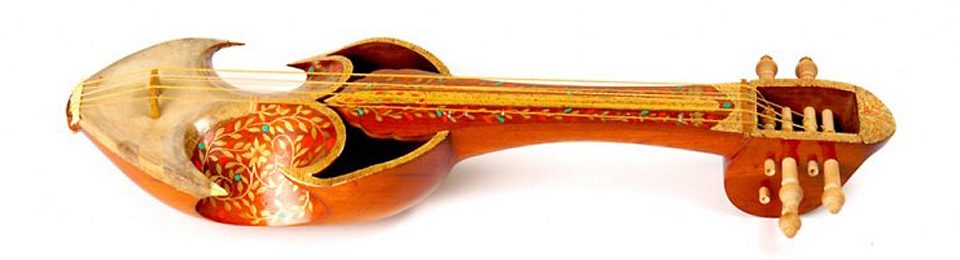
On September 2 and 3, 2013, Center on Studies in Sri Guru Granth Sahib (CSSGGS), Guru Nanak Dev University, Amritsar, with the Anad Foundation, New Delhi, organized a 2-day seminar during which musical instruments belonging to some of the legends of Gurbani Sangeet used between 18th-20th centuries were exhibit. The exhibition was inaugurated by the Jathedar Avtar Singh Makkar, President, Shiromani Gurudwara Prabandhak Committee (SGPC) in the presence of Professor Ajaib Singh Brar, Vice Chancellor, Guru Nanak Dev University, Amritsar. They were accompanied by Professor Balwant Singh Dhillon, Director, CSSGGS, Bhai Sahib Ashok Singh Bagrian and Dr. B. S. Rattan.
Some photos of the exhibition and the performance taken by Parminder Bhamra, Jatinder Singh and Jasbir Singh:
Preparations


The Exhibition


31-Raga Gurbani Kirtan rendition


14 Saturday Sep 2013
Posted in People
Bharat Music House is one of the famous music shop chains in Delhi. The main shop used to be one in the midst of many furniture shops on Panchkuiyan Road. With the infrastructure development that happened as a lead up to the Commonwealth Games, these shops have been shifted to the Gol Market area. Gurjit Singh Sokhi, the eldest son of Gyan Singh Sokhi, now plays host at the shop here while his dad sits at their Bali Nagar outlet. His youngest brother, Amarpal Singh, runs their third outlet at Lajpat Nagar called New Bharat Music House, which specializes in western music instruments.
Several years ago, Gurjit had sourced three sets of French made harmonium reeds for me and sent them to a factory in Kolkata. As the French or German reeds were made longer than the ones manufactured in India, the reed board needed to be custom made. Eventually, I got a fine triple-set scale-changer harmonium.
For the 31-raga Gurbani Kirtan performance at the Guru Nanak Dev University, Amritsar, I had requested Narinder Singh, staff at the Music Department to play the harmonium with me. During the performance, Narinder’s fingers were dancing on the harmonium. It was a big surprise for many who have seen me perform over the years especially since 1999, when I finally had been freed from the jaws of this instrument. The purpose of having this instrument was to practically show how it is inadequate for use in Indian classical music. When I sang the very first raga sri I demonstrated the unique intonation of its komal rikhab svar (second flat) and asked my accompanist to emulate that note – the harmonium just could not. Likewise, I demonstrated various other notes which the “harm-o-nium” is not able to render.
Here a few images I took with my phone while Gurjit tuned and repaired the harmonium for me:


A photo of the performance (harmonium being used only to demonstrate its inadequacy in Indian classical music) taken by cinematographer Jasbir Singh:

09 Monday Sep 2013
Posted in ANAD Events, Guru Nanak Dev University Events
ESEM XXIX Seminar, Berne, Switzerland Images II
Day 3, 4 and 5. Session VII. Roundtable chaired by Professor Dan Lundberg (Sweden), lunch break with the Swedish colleagues where we had one of our members playing the Accordion post-lunch, Sound Shuttle – A Sound Walk through Berne’s historic center (starting point Munsterplatz), and then the Excursion on Saturday, September 7, 2013, to Magisalp in Hasliberg region where we also got to see the cheese festival – what a cheese treat!
Image scape as follows:


06 Friday Sep 2013
Abstract for the Poster Presentation at the XXIX European Seminar in Ethnomusicology, Berne, Switzerland, 4. – 8. September 2013,
Cultural Mapping and Musical Diversity
This session was chaired by Professor Laura Leante. The other three presenters were Yann Laville (Switzerland) – The ambiguities of mapping: a few examples taken from FNS project Midas Touch and from the related exhibitions present at the Musee d’ethnographie de Newchatel, Hee-Sook Lee-Niinioja (Finland) – Arirang, Perpetual Korean Intangible Cultural heritage of Humanity, and Zhang Xingrong (China) – Musical Mapping of Yunnan province, Southwest China, 1984 to the present.
…
Imagining Revival and Restoration of the Lost Tradition and
Discipline of Gurbani Sangeet
By
Bhai Baldeep Singh
The Sikh Gurus (15-18 centuries) themselves created a system called Gurbani Kirtan that revived the whole musical traditions of India namely, pade, chantt, vaar and introduced newer forms such as partaal. Their compilation uniquely included the works of thirty other Bhakti Saints and Muslim Pirs of South Asia all of whom sang and lived between the 12th and 18th centuries. Given the turbulent political history of the Sikhs within the context of huge Muslim and Hindu majorities – the Sikh contribution to the Musical traditions of India has been overlooked. In spite of being one of the most important traditions of the music of ‘medieval’ and ‘pre-medieval’ India, a reservoir of information yet to be fully explored and analyzed, it stands nearly decimated. Considering the universal, tolerant, inclusive and plural message of Sikh scripture, the author’s research not only sustains the intangible heritage of the Sikhs but of India.
In the mid 80s, the author was introduced to Gurbani Kirtan and Sangeet, one of the oldest surviving musical lineages of Indian classical music, which was still being practiced in his family since eleven generations. His granduncles, Bhai Avtar Singh (1926-2006) and Bhai Gurcharan Singh (b.1915) were perhaps the last memory bearers of one of the last remaining streams of its knowledge.
The uniqueness about the abodh and/or sukham virsa (intangible heritage) is that every subsequent generation must learn it anew in order to sustain it. The sukham cannot be written or recorded in any medium in order to save it except a potential protagonist’s memory. Even more so, the tools to revive and conserve a near extinct heritage are also drawn from the realm of the intangible. When the author’s long and painstaking journey in recovering the Gurbani Kirtan shabd-reets (vintage compositions) began, he realized that there was so much more to the tradition than the extraordinary shabd-reets. Thus, he began a meticulous mapping and documentation of this tradition. Particular instruments, most becoming extinct by mid-20th century, were created and others adapted and appropriated for use in Gurbani Kirtan during the Sikh guru period. When a tradition dies, its pedagogical processes, the raga (melodic mode) – tala (established rhythmic patterns) forms, musical instruments – their lutheiry skills, playing modes, tool making and their usage, string making and usage, stringing and playing modes of particular instruments, oral narratives and so much more becomes extinct.
The ancient shabd-reets, many of them originals composed by some of the Gurus, Bhagats and Sufi masters, are so much more than a mere arrangement of notes. The author would like to write about the recovered riches as well as imagining the revival and regeneration of a tradition in a thematically chosen space, where the last remaining story-tellers converge as if in a prayer so the sacred lands may bloom again —where a tangible asset, a 12th century fort, is restored on the basis of vernacular architecture and proposed for adaptive reuse as a conservatory dedicated exclusively to the study of the cultural traditions of the land.
__________
The following is the poster (A0) I presented at the seminar. Each poster presentation had the participant speak for up to 15 minutes in the main auditorium with the interaction in the hall used more as interaction area. I was very glad with the response from so many senior ethnomusicologists and anthropologists. I spoke about the 27 years long recovery process when so much of the Gurbani Sangeet tradition has been salvaged including singing – the ragas and their grammar, musical instruments including rabab, saranda, jori, pakhawaj and taus – making and their playing techniques, has been revived and now made being disseminated at the Anad Conservatory site, Qila, Sultanpur Lodhi, Kapurthala, Punjab, by Anad Foundation in partnership with the Punjab Government.
Many images of elders from who mentored me over the last 27 years as well as of some of the youngest students who are now being taught at the Qila site were included in the poster. It also included the poster Kamleshwar Singh designed for the 31-raga rendition done by me on September 2, 2013 at the seminar hosted by the Center on Studies in Sri Guru Granth Sahib, Guru Nanak Dev University, Amritsar. A copy of the poster prepared by me for the ESEM XXIX, Berne, is being shared below:
 Day 2 Images
September 5, 2013

Mine was the first presentation of the four poster presentations – opening remarks…

Example of intangible heritage being sung – a 16th century composition of Guru Ramdas in Raga Kanra.

With Professor Giovanni Giuriati of La Sapienza, Rome. He still remembered my talk at his department that I gave in 1995, I think, when I sat on his table and sang in student ham-packed room!

The reception area where a lot of post session discussion happens…

Signing the Dhrupadi Rabab 2-CD album published by Anad Records for Professor Laurent Aubert the founder of Ateliers d’Ethnomusicologie, Geneve, who gave the 23rd John Blacking Memorial Lecture on the first day.

Professor Laurent, Professor Giuriati and inquisitive others.

A discussion on instrument taus with an Austrian research scholar who is studying a Tibetan tradition and speaks fluent Chinese.

With Professor Giuriati and others…

Mathew from UK, Professor Laurent Aubert (Swiss), Professor Galina Sychenko (Russia), Matthew Machin-Autenrieth (UK) and others.

Yodelling workshop with Doris Hintermann from Basel.

Audiovisual Performance Sonic Traces: From Switzerland by Thomas Burkhalter, Simon Grab and Michael Spahr (Ber/Zurich) – It was a fascinating one hour…


04 Wednesday Sep 2013
Posted in ANAD Events, Guru Nanak Dev University Events, Press
A report by Sri Manmeet Singh Gill carried in the Tribune.
September 3, 2013.

Photo: In his right hand is the (Dhurpadi) Rababa handcrafted by Bhai Baldeep Singh based on the 16th century Rabab of Guru Arjan Dev, the fifth Sikh Guru, while his handcrafted Saranda, in his left hand, is believed to have been originally designed by Guru Amar Das, the third Sikh Guru.
Misquote: Column 2 & 3 – it seems from the text that Bhai Baldeep went around in the country getting the instruments made. Untrue. he did go around the country to some of the biggest names trying to “convince” them to make the original instruments but they all eventually “confessed” that they had never learnt how to make them. In the winter of 1991-2, he discovered his grandfather, Gyani Bhagat Singh’s youngest classmate Gyani Harbhajan Singh Mistri who was the last remaining luthier with the original knowledge. He studied under him and made the instruments, apprenticing under him, from 1992 – 1996.
03 Tuesday Sep 2013
Posted in ANAD Events, Guru Nanak Dev University Events, Press
A report by Sri Navjiwan Gopal carried in the Indian Express. September 2, 2013.
The article has only one misquote – Saranda is said to have been designed by Guru Amar Das and not Guru Ram Das as printed in the article.

01 Sunday Sep 2013
Posted in ANAD Events, Guru Nanak Dev University Events

Caricature of artist Hardev Singh and Poster by Kamleshwar Singh. 2013.
01 Sunday Sep 2013
