• About The Anād Foundation
    • Aims & Objectives
    • Governance
      • Board of Advisors 2026-2029
      • ASHA 2026–2029
    • Trustees & Associates
    • Historical Records
      • Founder Trustees
        • Bhāī Baldeep Singh
          • First visit to the Qila
        • Chiranjiv Singh
        • K. T. S. Tulsi
        • Kiranjit Singh Bawa
        • Manjit Kirpal Singh
        • Pervinder Singh Chandhok
        • Raj M. S. Liberhan
        • Ranjodh Singh
        • Ravinder Singh Ahuja
      • Board of Advisors
        • Rear Admiral Kirpal Singh, AVSM
        • Major H. P. S. Ahluwalia
      • Associate Trustees 2008-2011
      • Associate Trustees 2011-2014
      • Associate Trustees 2014-2017
        • Mayank Singh Bawa
      • Associate Trustees 2017-2020
      • Associate Trustees 2020-2023
    • Team & Project Associates
    • Financial Highlights — Archival Record
  • Anād Khaṅḍ / Conservatory
    • Anād Khaṅḍ — The Proposal
    • The Institute
      • Faculty
        • Resident Faculty
        • Visiting Faculty
      • Learning Streams
        • Class With Bhāī Baldeep Singh
        • After-School Studies
          • AAS Study Programme Coordination Committee Meeting I & II
      • Workshops
        • Gurbāṇī Saṅgīt Workshops
          • With Bhai Gurcharan Singh
          • With Bhai Baldeep Singh
            • BBS I
          • With Ustad Harbhajan Singh Namdhari
        • Dance Workshops
          • Kathak with Maria Maurizia Costanzo
            • Maurizia’s Workshop Note
            • Gallery
          • Chhau Dance with Luisa Spagna
            • A Note by Luisa Spagna
        • Theatre Workshops
          • With Kuljeet Singh
            • Theatre in the spaces
            • Gallery
        • Photography
      • Outreach
        • 2018: Poznań, Poland
        • 2019: Poznań, Poland
        • 2025: Rovigo, Italy
      • Gallery
    • ANĀD Scientific Advisory Committee 2009-2017
      • First Thoughts
        • By Professor Paolo Ceccarelli
        • By Professor Rabindra Vasavada
        • By Ashok B Lall
    • Costs and Funding Framework
    • Luthiery School
      • Rabāb
        • Harbhajan Kaur’s Rabab
      • Saranda
      • Taus
    • Audio-Visual Restoration Studio
  • Gurū Gaurav 350
    • Guru Gobind Singh — A Prophet With Difference
    • Gurū Gaurav — A Concept Note
    • Gurū Gaurav — Press Release
    • Performers
      • Rânsubāi
        • Inauguration
        • Raghuvir Mallik
        • Sangeet Kumar Pathak
        • Bibi Ashupreet Kaur
        • Ashutosh Upadhyay
        • Dr. Alankar Singh
        • Vidushi Jyoti Hegde
        • Bhai Baldeep Singh
        • Pandit Ram Kumar Mallick
        • Bhai Balbir Singh Ragi
        • Bhai Baldeep Singh —Poetry Reading
        • Pandit Rajendra Gangani
        • Pandit Yashpaul
        • Mohan Shyam Sharma
        • Jagat Narayan Pathak
        • Nihal Singh
        • Indra Kishore Mishra
        • Dr. Anil Chaudhary
      • January 1, 2017
        • Guru Gaurav Event Hosts
        • Introductions
        • Pandit Ravi Shankar Upadhyay
        • Dr. Ajit Pradhan
        • Dr. Nirinjan Kaur Khalsa
        • Ustad Asheesh Khan
        • Poet Kulwant Singh Grewal
        • Bhai Baljit Singh Namdhari
      • January 2, 2017
        • Dhaddi Desraj Lachkani
        • Poet Jaswant Singh Zafar
        • Parminder Singh Bhamra
        • Manu Seen
        • Shekhar Sen
        • Pandit Prem Kumar Mallick
      • January 3, 2017
        • Nashir Naqvi
        • Pandit Uday Kumar Mallick
        • Baha’ud’din Dagar
        • Vidushi Gopika Varma
        • Pandit Vinod Pathak
        • Jasbir Jassi
      • January 4, 2017
        • Pandit Ram Prakash Misra
        • Manganiārs
        • Samiran Sanyal
        • Dr. Gurinder Harnam Singh
        • Sukhwinder Amrit
        • Suvir Misra
        • Dr. Madan Gopal Singh
      • January 5, 2017
        • Jago Tareenjan Group
        • Dr. Francesca Cassio
        • Ustad Daud Khan Sadozai
        • Songs of the Khalsa
        • Dr. Ritwik Sanyal
        • Dr. Umayalpuram Sivaraman
        • Dr. Surjit Patar
        • Bhai Baldeep Singh —Gurbāni Pade
    • Review II by Professor Gajendra Narayan Singh
    • Production Team
  • Heritage Conservation
    • Intangible Heritage — Sūkham Virsā
      • Luthiery Tradition
    • Tangible Heritage — Sthūl Virsā
      • Qila Sultanpur Lodhi
        • Lahore Gate
          • Heritage Hammered by IP Singh
        • Darbar Hall
        • Old Kacchehri (Colonial structure)
        • Delhi Gate
        • Mosque
        • Qila Walls
    • Technology Partners
  • Punj-Care Initiatives
  • Events
    • Full Moon Events
      • May 2011
        • 6th Kāv Tarang Review
      • September 2011
        • Gallery
      • February 2012
      • October 2012
        • October 2012 Punya Baithak Gallery
        • 2012 10 29 Punyā Baithak Press Reviews
    • Poetry Festivals
      • 7th Anād Kāv Tarañg
    • Theatre
      • Story-telling by VK
    • Archives
    • Laya Darshan: Revealing the Riches of Indian Rhythm
    • Jashan 2006
    • 2008 Dharati Suhāvī
    • 2013 Harī Rāgu Gāthā: 31-Rāgu in Gurbāṇī
    • 2014 Hari Rāgu Gāthā: Singing of 31 Rāg in Gurbāṇī
    • Jashan 1915-2015
    • Gurū Nānak Dēv 550th
    • Virtual Vaisākhī 2020
    • 2020 Rai Radio3 — Dharati Suhāvī
    • 2020 Expressions on Nature: Dharati Suhāvī
  • Anād Awards
    • Award Jury
    • Anād Sanmān
      • Jashan 2006
        • Jashan 2006 Review
    • Kāv Sanmān
      • 2008
        • 2008 Review
      • 2009
        • 2009 Review
      • 2010
        • 2010 Review
      • 2011
  • Study at Anād
    • Gurbāṇī Saṅgīt Retreats
      • Retreat 61: Sikh Academy, Surrey, BC
        • Retreat 61: Ṭīkā Tipada Rāgu Mēgh
        • Retreat 61: Bilāvalu Ṭīkā — ‘Aman’
        • Retreat 61: Bilāvalu Ṭīkā — Sūlfākh & Ḍhāī
        • Retreat 61: Dhurpadā — Rāgu Sāraṅg
        • Retreat 61: Kaliān Sargam — SRG & GMP
        • Retreat 61: Rāgu Ṭikā Śuddh Malār Kul-mitra
        • Retreat 61: Rāgu Sūhī Ṭīkā
        • Retreat 61: Rāgu Sārag Āo Jāo
        • Retreat 61: Rāgu Śuddh Malār Tadra Dānī
        • Retreat 61: Āsāvarī Ṭīkā — Sūltāl
      • Retreat 25: Merced, California January 2010
        • Gallery
      • Retreat 26: London, Ontario
      • Retreat 27: Tucson Arizona January 2011
        • Love Poem
        • Gallery
      • Retreat 28: Espanola, New Mexico, July 2011
        • Amrita Kaur Khalsa
        • Gurkaran Singh
        • Guru Mander Kaur
        • Gurumukh Singh CPA
        • Harbhajan Kaur Khalsa
        • Keerat Kaur Chahal
        • Nihal Singh
        • Nirvair Kaur
        • Raviraj Singh
        • Siri Sevak Kaur Khalsa
        • Gallery
      • Retreat 29: London, Ontario 2011-12
        • Student Reviews
          • Keerat Kaur I
          • Keerat Kaur II
          • Baljinder Singh Bassi I
          • Baljinder Singh Bassi II
          • Baljinder Singh Bassi III
          • Tanvir Singh Suri I
          • Tanvir Singh Suri II
          • Harkamal Singh I
          • Raviraj Singh I
      • Retreat 30: Qila, Sultanpur Lodhi 2012
        • Concert inside Kapurthala’s Modern Reform Centre, February 18, 2012
        • Mid-term Review by Nirvair Kaur
        • Review by Nadar Nihal Singh
      • Retreat 31: Albuquerque, NM
        • Nirvair Kaur’s Review: 31st Albuquerque Summer Kirtan Course
        • Keerat Kaur’s 31st Summer Retreat Review
      • Retreat 32: Mississuaga, Ontario
        • Keerat Kaur’s Course Review
      • Retreat 40: Albuquerque, New Mexico
        • Gurbani Sangeet Retreat Review: Nihal Singh
      • Retreat 42: Rajgir, Bihar
      • Retreat 48th: New Delhi
      • Retreat 51: Online from Anād HQ
      • Retreat 52: Online from Anād Foundation HQ
      • Retreat 53: Rochester, MN
        • Rochester Preview & Screenshots
      • Retreat 54: Seattle, WA
      • Retreat 55: Seattle, WA
      • Retreat 56: San Francisco, California
      • Retreat 57: Surrey, BC
      • Retreat 58: San Francisco, California
      • Retreat 59: Khalsa Centre, Canada
      • Retreat 60: San Francisco, California
    • Anād Online
      • Anād 31
        • 4. Rāgu Āsā
          • ‘Sō Daru’ Rāgu Āsā Jaitāl — Satināmu Sirī Vāhigurū Sāhib Jī
        • 24. Rāgu Bhairau Sūrtāl
      • Anād Online Classes Log
    • Internship Programmes
      • Vasant Valley School Class XI 3-week Internship 2012
        • Chairman’s letter to Vasant Valley School Internship Students
        • Delhi Head Office – Tentative Schedule
        • Student Reviews
          • Anmol Handa
          • Himmat Singh Guram
          • Kavya Rai
          • Luigi Hari Tehel Singh
          • Uday Talwar
          • Wanhee Ji
        • Vasant Valley School 2012 Internship – Images 1 – Delhi
  • YaarAnād
  • Contact Us
  • Donate / Support Anād
  • YaarAnād Virtual Baiṭhaks
    • YaarAnād Virtual Baiṭhak – Season I
      • 2020 April
      • 2020 May
      • 2020 June
      • 2020 July
      • 2020 August
      • 2020 September
      • 2020 October
      • 2020 November
    • YaarAnād Virtual Baiṭhak – Season II
      • 2020 December
      • 2021 January
      • 2021 February
      • 2021 March
      • 2021 April

The Anād Foundation

~ Culture | Conservation | Continuity

The Anād Foundation

Category Archives: Postcards from the Journey

Postcard 44: The Color of Love

09 Tuesday Oct 2012

Posted by in Postcards from the Journey, Reflections

≈ 7 Comments

Tags

Nirvair's blog

There are many variations of rāga basant in Gurbāni Sangeet. The melodies introduce various flavors such as basant hindol in kalyān ang,  sohni basant in mārva ang, and budha basant and basant bahār in kāfi ang. There are also ancient basants in purvi ang and kamāj ang. Rāga basant celebrates spring, the blooming of the soul described with images of flowers and new green life. There are many songs that remember again the realities of the human experience, renouncing not only the five thieves that lead us astray with intoxicating māyā, but also renouncing the intoxicating superstitious and religious dream states that keeps us asleep and apart.

Several of the rāga basant shabds in Gurbāni Sangeet are from a longer poem by Bhagat Kabir Ji that describes the springtime of spiritual awakening and the unfortunate trappings of māyā. Guru Nanak tells us that the one who knows the all-pervading One is known by the sign of compassion. Why not be compassionate? Although we humans tend to judge, label and categorize other humans, separating them (and ourselves) according to our own self-righteous perceptions and criteria of worthiness, Bhagat Kabir asks where is there a truly pure place, where is there no impurity? Wouldn’t we all be more compassionate toward the shortcomings of others if we remembered our own tainted tendencies?

We live in a world that is as it is. Who are we to impose judgment, to hold others to standards to which we don’t hold ourselves? Anything, regardless of how pure or impure it was before, has been altered by our own eyes and ears, distorted by our own organs of perception. What if we could see the perfection instead of what’s wrong with the other? How do we see with the color of love?

That’s what happens when the soul blooms. There is no need to wait, Guru Arjun Dev Ji says today is the day. Sing the praises, life is a celebration, bliss happens. “āj hamāre mahā anand”. When the soul blooms, it is like playing with red dye at Holi, and love leaves its color on everything.

In Krishna Avtār, Guru Gobind Singh comes to call. Why be proud? I’ve come to call you. Do what pleases the beloved. Otherwise why are you so beautiful?


Postcard 43: This Music is Awesome!

02 Tuesday Oct 2012

Posted by in Postcards from the Journey, Reflections

≈ 2 Comments

Tags

Nirvair's blog

Last week the music teacher at Khalsa Montessori School asked me to bring some instruments and sing for the preschool and early elementary classes. 150 children from six classrooms got introduced to taus, tanpura, and pakhawaj, sang sa re ga ma pa da ni, and clapped along while they counted the taal. These children are typically American, come from diverse backgrounds, and most have not previously heard Indian music. But they loved this music and on Friday I received a bundle of thank you cards made by the children. Here are some of their comments and illustrations:

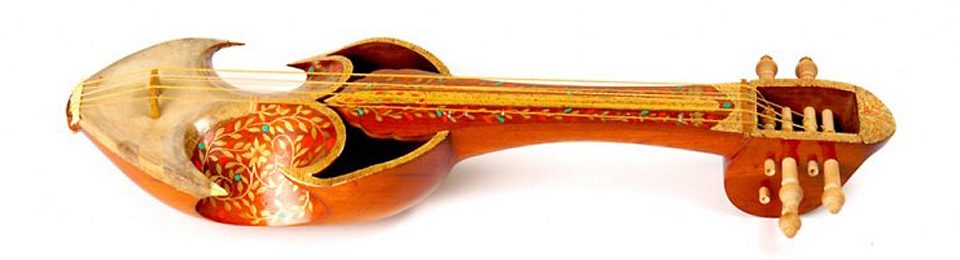
“I really loved the taus because I liked the sound that it made and that it is shaped like a peacock.”


“It is very cool to see new instruments you never seen before.”


“Thank you for doing that amazing show. The instruments were verrrrry COOL!”


“I loved the music you played for us. It was so peaceful and nice and the instruments were very cool.”


“I like the sa re ga ma pa da ni sa.”


“I wish I can come to India.”


“That was awesome!”


“That was totally, really, super-duper and flabbergastingly awesome! I really enjoyed it. Thanks a septillion.”


“When I grow up I want to do what you did.”


“It was a mystery to me how the sound came to me if there was no hole in the tanpura.”


“Thank you for showing us the way how they say the notes in India.”
“The music almost made me cry.”


“It was really interesting how you put dough on the other end of the pakhawaj.”
“It made me very happy”

If you ever wonder if this ancient music is still relevant, just ask the children! If you ever wonder if it is important to make sure this music is remembered, just ask the children!

Postcard 42: Raga Basant

17 Monday Sep 2012

Posted by in Postcards from the Journey, Reflections

≈ Leave a comment

Tags

Nirvair's blog

How do you go within?
Do you go with head bowed?
Do you go with a heavy heart?
Do you go in peace, with a quiet stillness?

Or do you go in dancing?
With eyes of wonder and a grateful heart?

Does your heart ache and break sometimes?
Or melt into a pool of oneness?

And sometimes, does your spirit bloom,
Scattering thousands of petals of light
Wherever you walk?

Postcard 41: Rāga Bhairo

09 Sunday Sep 2012

Posted by in Postcards from the Journey, Reflections

≈ 1 Comment

When I started singing the shabds in rāga bhairo a few weeks ago, I wondered, “how will I get through three weeks in rāga bhairo when my heart is already breaking on the second day?” Acutely aware of self-loathing, how can a creature feel they are not good enough for their creator? Overwhelmed by responsibilities in the world of work and relationships, the shabds remind us that it is all maya. But we still engage and remember nām, remember the flow, see with the eyes of devotion, know it is all good.

On day three, Bhagat Kabir Ji showed up with his sense of humor, laughing at the futile efforts we humans make to try to manipulate God, like a plaything. Disregarded by others as insane, Kabir Ji laughs it off, and prays “I’m insane, but I’m yours!” Then the songs of praise in rāga bhairo begin, “khub khub khub khub khub tero nām!”

I enjoy rāga bhairo and it is one of the first rāgas we learned from Bhai Baldeep Singh. Threre are many shabds from the bhagats like Kabir Ji and Nam Dev Ji in rāga bhairo and the raga evokes that deep state of clarity, seeing through the eyes of devotion the whole expanse of life, the universe, and God.

I recently saw a documentary by an American film maker, Vikram Gandhi, who posed as a guru to better understand how it is that people become attached to teachers and teachings, even false ones. I wonder how Bhagat Kabir or Bhagat Nam Dev would like this movie. The intensity of human longing and commitment is actually quite astounding. What is it that drives us to keep looking, keep trying?

During this American election season I see religious groups, including Sikhs, clamoring to get in line behind one candidate or another. Is it the same “innocent” gullibility that inspired intelligent professionals in Arizona to latch on to a false teacher like Vikram Ghandi’s  Kumare, a guru whose name means “wrong path”? Are people so uncertain of their own relationship to God and goodness that they are willing to abandon even basic values to climb into bed with haters and corporate greed in the name of religious values? Or are the religious groups also looking for validation, social status, influence and empowerment, using and being used by the politicians and the powerful people? Did Vikram Gandhi discover a basic human tendency when he created the character Kumare?

I feel almost as sad completing the shabds of rāga bhairo as I felt starting them. These shabds are deeply moving and are dear companions. But the sad place of seeing the sorry state of reality is not where these shabds leave us. The last few shabds in rāga bhairo are a gift. They leave us smiling, laughing with Bhagat Nam Dev at the image of a  “man without a nose who does not look handsome even with 32 beauty marks.” The gurus and bhagats get us to smile at our humanness, our misguided efforts and trust in kirpa, in goodness and grace, to see the beauty and power surrounding us, flowing through us. Remembering the shabd, remembering the name brings relief to the mind. Removing the veil that distorts the vision, you can see clearly and grace arrives.

One shabd has my name in it, so it seems an invitation to pay close attention: nirvair purakh satigur prabh date. Singing in our desert home this stormy morning as the thunder roared and rains poured down, “when he is pleased dry wood becomes green. When he is pleased rivers flow across desert sands… mind and body are cooled, in the mind Amrit rains.”

Life at the Pace of Dhrupad

03 Monday Sep 2012

Posted by in Postcards from the Journey, Reflections

≈ 2 Comments

Francesca Cassio (Hofstra University, Long Island NY)

During my recent fieldwork in Punjab (August 2012), I had to opportunity to spend few days at Sultanpur Lodhi, where Bhai Baldeep Singh established the Anad Conservatory’s seat in the enchanted atmosphere of a historical Qila (a 12th century royal palace in ruins).

I reached Sultanpur Lodhi traveling from Amritsar by car, and it was quite an inner journey to leave the chaotic holy city to merge into the dimension of the countryside where the pace of life is articulated in the steps of peasants and their cattle.

I had the impression that time slowed down, and laya took a vilambit pace.

At my arrival I was welcomed in the calm dimension of the Qila, by their inhabitants. The bani of the Guru in raga malhar – a dhrupad– was filling the air. Bhai Baldeep Singh’s voice resounded in the ancient Darbar Hall (King’s court) located at the centre of the Qila.

Far from touristic routes, the historical site of Sultanpur Lodhi with its ruins and blooming greenery, the sound of the birds all around, it easily brings the visitor to imagine and experience what in ethnomusicology is described as soundscape, the sonic environment of a past or a different culture (Strohm 1991, Schafer 1977).

The evocative atmosphere reminded me of a similar experience occurred when I have been at the Qila of Fatehpur Sikri to accompany the concert of my teacher, the late Padma Bhushan Ustad Rahim Fahimuddin Khan Dagar (1927-2011).

With Padma Bhushan Ustad Rahim Fahimuddin Dagar, performing at Fatehpur Sikri, 2002

That morning Dagarsaheb performed raga miyan–ki–todi and I had the privilege to play tanpura and sing along with him. Sitting on the stage, I was impressed by the magnificent architecture of the place, in the middle of nowhere, just like the complex architecture of Dagarsaheb’s alapa carved in the centennial silence.

I was so exited to perform where Tansen was supposed to have sung, that my thoughts, my heart and my music were running fast. I remember Dagar Saheb turning towards me to say that I had to keep calm, to slow down the pace of my thoughts, my breath, to merge in the meditative structure of dhrupad alapa, bandish and layakari. As he was used to say: “dhrupad is not a musical form. Listen the atmosphere all around, feel the speed of the wind, of your breath and then sing accordingly”.

Varanasi, Royal Palace at Chet Singh Ghat 2004

In about 16 years of learning from Ustad Rahim Fahimuddin Khan Dagar, his perception about music as well as his lifestyle convinced me that the pace –laya– of dhrupad matches a dimension of life where there is no rush.  One might say that dhrupad requires a certain mindset to be performed, as well as the dhrupad laya (and dhrupad rhythmic structure) has an effect on mind.

Tagore’s house
Image courtesy of Viswa Bharati University. 2008

At a personal level, I have found that in order to sing an ancient form of music such as dhrupad it’s important to reconnect to that ancient quality of life and biorhythm. That’s probably the reason that pushed me to live and study in India for several years, merging myself in the soundscape of places like the old Qila at Chet Singh Ghat (on bank of the Ganges) in Varanasi, the Tagore’s house in the peaceful forest of Shantiniketan (West Bengal), the old 18th century haveli in the Thar desert in Rajasthan, and -last but not least- in Amritsar, at the court of the Almighty.

All these memories and thoughts came back to me when I got out of the taxi and started to walk in the Qila of Sultanpur Lodhi, in Punjab. The fast pace of my trip and fieldwork was suddenly broken by the slow laya of shabad kirtan (in dhrupad ang) and its practice.

Practicing with Bhai Baldeep Singh in the old 18th century Haveli, Jodhpur 2010

Just like Ustad Rahim Fahimuddin Dagar did at Fatehpur Sikri, Bhai Baldeep Singh brought me back to singing at the pace of dhrupad and, in the little time I spent at the Qila, kindly he gave a wonderful talim in shabad kirtan as well as in the percussion technique and repertoire according to the Amritsari baaj school.

Kirtan with Bhai Sant Narinder Singh at Sri Atul Baba, Sri Harmandir Sahib Complex, Amritsar 2011

Kirtan at Glen Cove Gurdwara, Baisakhi 2012, accompanied by Parminder Singh Bhamra

Sung in the monsoon atmosphere, during the month of Bhadoon the melody of raga malhar resounds all day long in the Sri Darbar Saheb in Amritsar as well as in every Gurudwara, so that even a non-musician may assume to know raga malhar by heart. Yet surprisingly the malhar that we heard in Sultanpur Lodhi sounded a little bit different. Bhai Baldeep Singh carefully explained us the differences between malhar and shuddh malhar, the original form of the raga with only five notes as sung at the Gurus’ time. This form of the raga might appear very close to other audav (pentaphonic) ragas.  After comparing it with raga durga, Bhai Baldeep Singh demonstrated how shuddh malhar preserves its own melodic characteristics that however enable us to identify the raga.

Of particular interest was the session started in the second quarter of the night with raga natt. Bhai Baldeep Singh introduced the students to the peculiar vakra (oblique) movement of raga choosing an authentic masterpiece of the fifth Sikh Master Guru Arjan Dev. Here he compared it to other ragas such as gond, bilaval, suhi showing how all of these are so close yet so far from each other.

The composition in raga natt contains all the elements (and the beauty) of the Gurbani tradition, in its apparently simple construction.

The majestic melody S M G M –RS,  PDMPGM- flows on the tin-tala Punjabi theka,  perfectly serving the expression of the bani:

Ha▫o vār vār jā▫o gur gopāl.
I am a sacrifice, a sacrifice to the Guru, the Lord of the World.

While the first stanza goes in the higher octave touching the pancham (the fifth note), as the highest point of the prayer.

Mohi nirgun ṯum pūran ḏāṯe ḏīnā nāth ḏa▫i▫āl.
I am unworthy; You are the Perfect Giver.
You are the Merciful Master of the meek.

Practicing raga natt at Sultanpur Lodhi Qila, August 2012

As in this case, the teaching of Bhai Baldeep Singh is often focused on the musical exegesis of the authentic Gurbani tradition. His musical analysis aims to show the thought beyond the actual sound, and how poetry blends with raga and tala in order to constitute an effective unity.

In more than 25 years of research, Bhai Baldeep Singh collected original masterpieces of the Gurus’ time and his memory represents an oral archive of inestimable value.

When I recently visited Padma Bhushan Professor SK Saxena (an eminent musicologist and expert of musical aesthetics) he affirmed on this regard: “All the repertoire sung and performed by Bhai Baldeep Singh should be recorded and analyzed !”

Interview with Professor SK Saxena, New Delhi, August 2012

Saxena not only expressed his appreciation for the huge work of documentation, but he was also fascinated by Bhai Baldeep’s analytical approach to compositions, with particular regard to the rhythmic tradition of the Amritsari baaj that Bhai Saheb represents.

As Saxena explained, the exegesis of the raga and tala is a very important part of the Indian heritage and thought.

“Every sound enters silence in a particular way” he said with his cracking voice, before quoting an example from Surdas, where the sound of the anuswara in the words sang, bhang, bhojang and rang is meant to create an effect on the poet as well as on his listener.

It’s a matter of music semiology (Nattiez 1991), and Saxena on this regard suggested an interesting analogy between Shakespeare’s poetry and the rhythmic tradition of North India.

“Just as Shakespeare’s plays are admirable in respect of this quality that the very opening scene is able to give us the feeling of the entire play. Now, in the case of rhythm, the very first pace or laya at which you articulate the first syllable it sets the rhythm of the entire pattern to follow.”

As he wrote in the volume The Winged Form (Saxena 2012) this concept can be applied to the analysis of the alapa, compositions as well as to rhythmic patterns. On this regard during our interview he said:

“Take the example of dhamar, and see the difference if I speak ‘ K’ …    or if I say KAA! Dhi te dhi te…”

In total agreement with this perspective Bhai Baldeep Singh (who was present during the interview) added that in the Amritsari baaj, significantly the opening syllable is not Ka but “KAI…! “ And in this way the whole aesthetic of the Amritsari baaj style is established.

Bhai Baldeep Singh in dialogue with Prof. Saxena, New Delhi, August 2012

The conversation continued with amazing examples of recitation of rhythms that can’t be described. I can only report Saxena’s comment to the Amritsari baaj style and repertoire that Bhai Baldeep Singh demonstrated that day (see picture):

“Not only the rhythmic patterns played on the drums are important but also the recitation it’s just important and fascinating as the actual playing.
The intellect of those who designed such patterns is amazing….”

This conversation came back to my memory when I sat with my teacher practicing the pakhawaj paral-s. Bhai Baldeep Singh was playing jori while I was reciting and memorizing the exercise after him…. Left the fast pace of my fieldwork’s schedule, I was caught in the majestic dhrupad laya right from the first KAI..!

References:

  1. Cassio, Francesca. 2000. ‘Percorsi della Voce. Storia e tecniche esecutive del canto dhrupad nell’India del Nord’. Bologna: Ut Orpheus
  2. Nattiez, Jean Jacques, 1990, ‘Music and Discourse: Toward a Semiology of Music’, (engl Trans. Carolyn Abbott). Princeton: Princeton University Press
  3. Saxena, S. K., 2012, ‘The Winged Form. Aesthetical Essays on Hindusthani Rhythm’.  (second revised edition). New Delhi: Sangeet Natak Akademy – DK Printworld
  4. Schafer, Murray, 1977, ‘The Soundscape: Our Sonic Environment and the Tuning of the World’. Destiny book
  5. Singh, Bhai Baldeep. 2004. Jori. The Amritsari Baaj.  New Delhi: Anad Foundation
  6. Singh, Bhai Baldeep. 2011. ‘What is a Kirtan?’ In Sikh Formation, Volume 7, number 3. Abingdon: Routledge. pp 245-296
  7. Strohm, Reinhard, 1991, ‘Music in Late Medieval Bruges’. Oxford: Oxford University Press
Postcard 40: Rāga Kedāra

25 Saturday Aug 2012

Posted by in Postcards from the Journey, Reflections

≈ Leave a comment

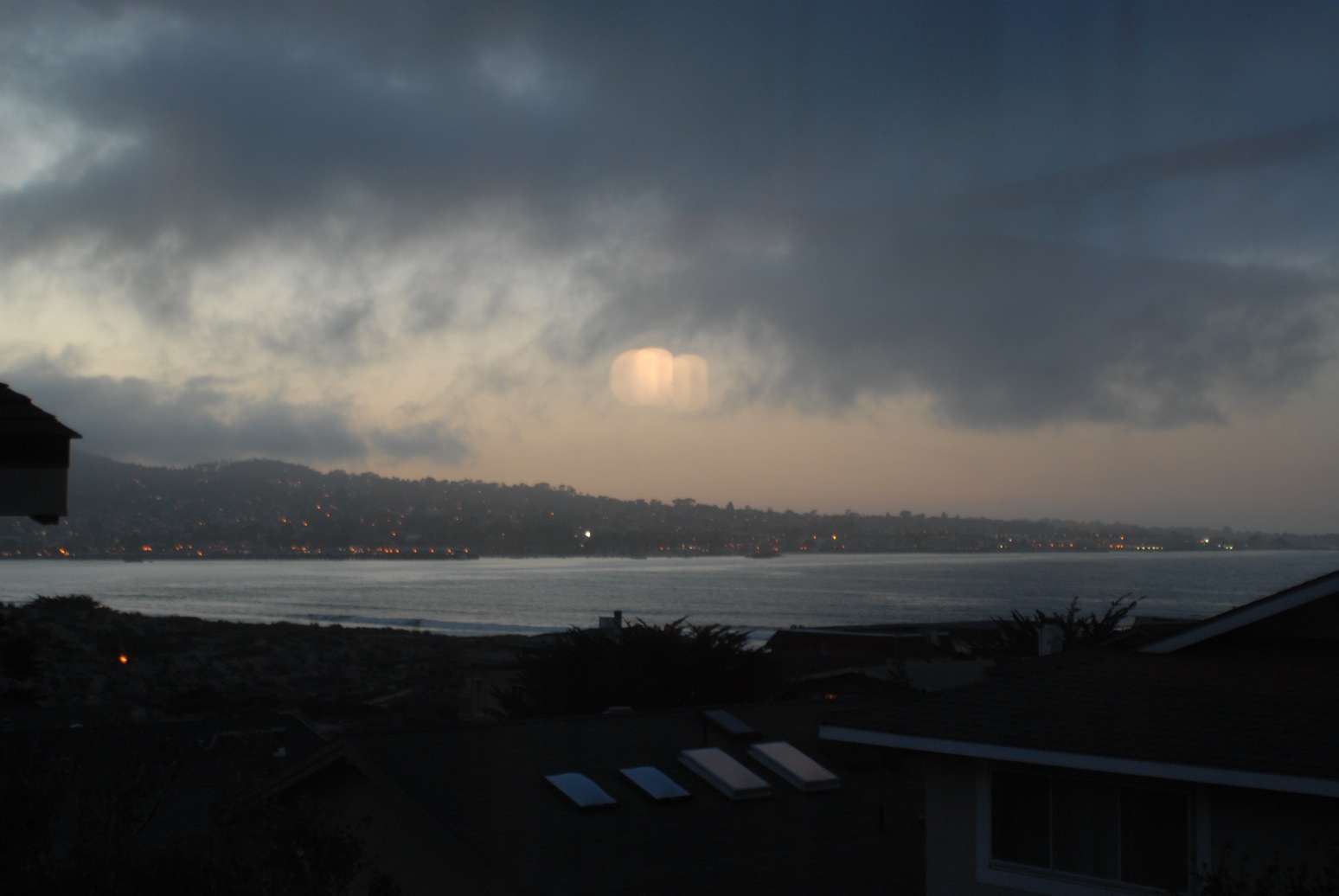
Sunset as seen from Sat Kirtan Kaur’s home (classroom).

Rag Kedara
7/18/01 Monterey

From stillness
The call emerges, “come”.
The dance of the singer’s voice
Draws the beloved near.
In an instant he appears
And the glow of his presence
Consumes all sense of time and space.

While the world stands still
The two dance on
Around the fire of sound
Caller and called,
Together as one.

Then into the silence
he slips away again
leaving only a shadow
and the fragrance of his coming.

Until now, this little poem was the only attempt to describe my first experience with rāga kedāra. The first time I heard rāga kedāra it was a summer night in Monterey, California. Bhai Baldeep Singh sat in front of a wall of windows overlooking the seamless black expanse of sea and sky, dotted with stars that twinkled in the heavens and sparkled on the water. The small sangat circled around, wrapped in shawls, our ears just beginning to register a barely audible note resonating in the cool night air. The note slipped easily, transforming itself, fluid like water in the bay below, circling, flowing into the lower octave, than spiraling, stretching to the higher. As the alāp developed the patterns became more complex, the pace quickened, the sound filled the room.

To me, a listener, time seemed to stand still and the world seemed to pause, hushed in silence as rāga kedāra unfolded, emerging like a living presence among us. Then, like the tide, the song receded until all that remained was the stillness it had itself evoked, damp with traces of the song memory. I felt transported to a new vantage point from which to see.

The bāni in rāga kedāra spans the full spectrum of human life– birth, attachments, ego, work in the world, entanglement and death as well as grace, peace, meditation and nām intoxication. The devotee lives in the world unattached. Remembering nām, affairs are taken care of. In the Lord’s sanctuary there is no resistance, the world is not avoided, but there is a sense of ease, trusting the Doer to set things right.

Like the sky merging into the sea, rāga kedāra flows seamlessly between the lower notes of the octave and the higher notes. Whereas the pancham appears in some rāgas as a springboard for ascending, there is no dividing line in rāga kedāra. The notes in rāga kedāra slide easily between low and high as if life itself flowed with no effort between inner and outer, work and worship, heaven and earth, a dance of simultaneous engagement and renunciation, without duality, encompassing all of reality into One.

Teacher goes on shooting spree…
Nirvair Kaur playing the Taus
One of those long never-ending hours…

Sunset as seen from Sat Kirtan Kaur’s home (classroom).

Anad Khand Beckons..!

20 Monday Aug 2012

Posted by bhaibaldeep in Postcards from the Journey, Reflections

≈ 4 Comments

It was a long drive, starting at 9p from Nizamuddin, first stop Chandigarh meeting mom after almost 8-9 weeks, and then touching base at the Qila – 4:30a; Raga Natt through out/Hau Vaar Vaar Jao Gur Gopal till Chandigarh/Kou Hai Mero Sajan Meet till Village penultimate, Dalla, wherefrom hailed Bibi Damodari, the wife of Guru Hargobind, the 6th guru – the mother of the ninth, Guru Teg Bahadur, and the grandma of the tenth, Guru Gobind Singh.
Raju, works as a cook at Anad, Qila Sultanpur Lodhi, accompanied me this time. He also wants to be a singer and I have have been teaching him off and on for some time. After I had sung the first Natt composition, instead of going nuts, he began to sing along. Soon he was understanding, as I sang on a few improvisations as we passed Ropar, the difference between various mukaa-s, tinn mukaa-s, tcheh mukaa-s, nau-mukaa-s and so on. He even held a digital-audio recorder sans a flinch.
It is quite something driving through all these places and at times one feels their presence still or perhaps, I have just gone bonkers…
😉

🙁
The natural forests have long gone, the beautiful and seductive rivulet Kali Bein long dead – the gardens famous in Akbar’s Ain-e-Akbari long wilted – the corrupt minds have usurped all those lands and now, worry about my presence here for they fear – spring may once again visit albeit to stay for a longtime this time – that Nanak gurus’ Rababa and Mridang might just resound again and whose songs may cause an awe-filled and wonderstruck revolution yet again…

If you continue past Sultanpur Lodhi, you reach Village Parowana, where lives still the legend of Rababi Bhai Firanda, whomfrom came the Rababa of Bhai Mardana at the behest of Nanak Shah Faqeer – Hindu Ka Guru Mussalman Ka Peer.

All these places have lost their vernacular uniqueness and I have a vision – an action plan which is feasible and doable.
Are there any romantics still around?
You know where to find me – join up folks – it is high time…!

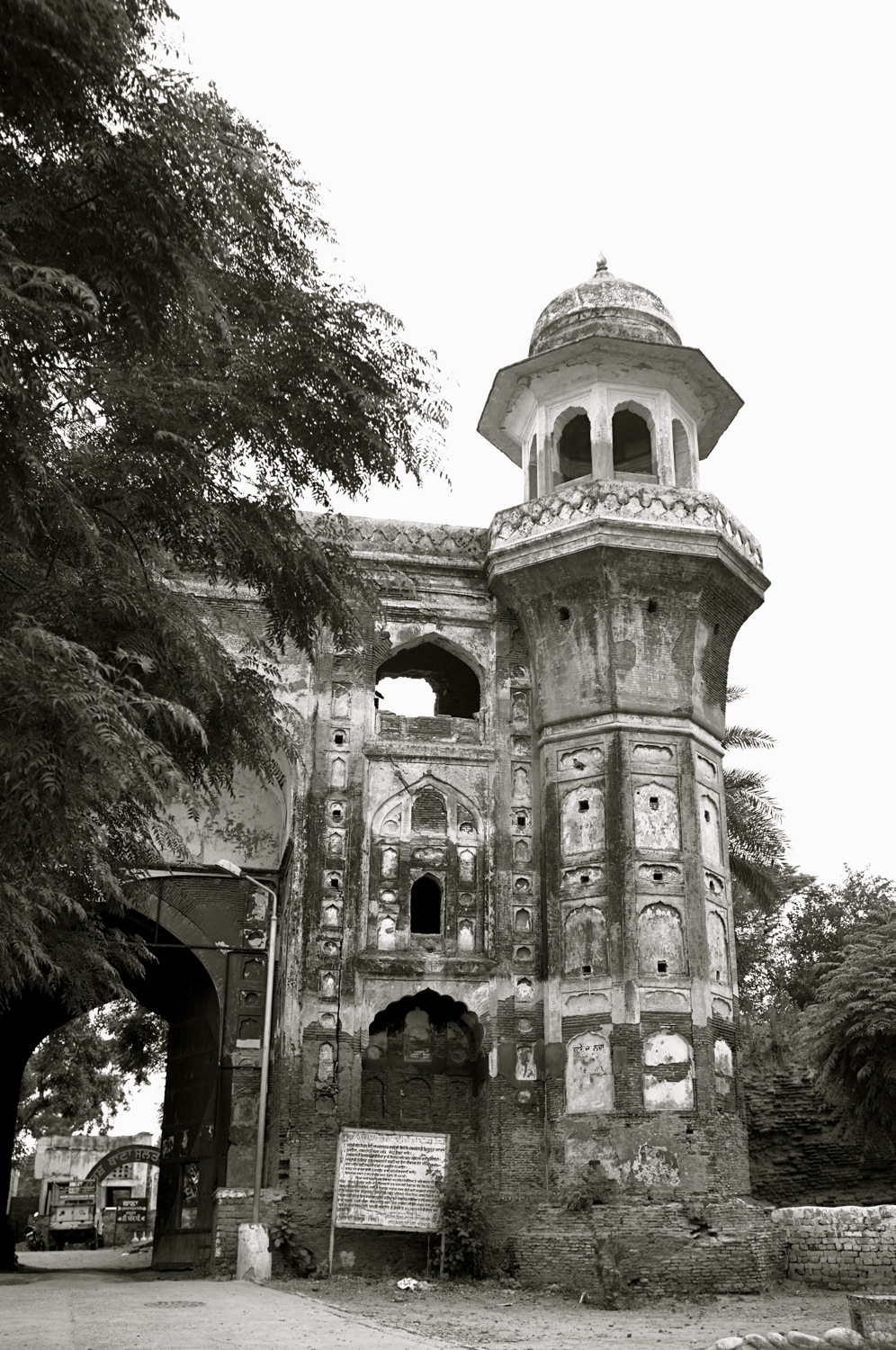
Lahore Gate, Qila Sultanpur Lodhi
Photo by Thomas R. Hughes – courtesy Rameet Kaur Dhaliwal Hughes.
July 2012.

Postcard 39: Sing the Songs

17 Friday Aug 2012

Posted by in Postcards from the Journey, Reflections

≈ Leave a comment

Sometimes the songs extol the virtues of singing itself. Throughout Siri Guru Granth Sāhib there are songs that describe the path of kirtan, the rewards of chanting, singing and reciting. The songs of rāga gond are like that, songs in praise of singing. The praise is not for just any song, but for those songs that spring from consciousness, that emerge from knowing, that are born of experience.

Raga Gond
Ignited by a heart at peace,
Kindled by a soul’s release,
Songs to praise the Only One,
Songs to sing when the searching is done,
Songs after freedom from false illusion,
Songs after cleaning mental pollution,
Meditate, sing, remember the Name,
Let go of fear, remove the pain,
Fly to the heavens where you belong,
Sing praise to God, sing praise to the song.
Nirvair 8/2/12

These weeks have been busy. In America this is the time of year that schools welcome students and staff who are returning after the summer vacation. There is much to do to prepare for the new school year– hiring, training, planning, scheduling, organizing, and lots of meetings. This year our preparations were interrupted with news of the tragic shooting at the gurdwara in Oak Creek, Wisconsin. Since we don’t have a gurdwāra in Tucson, Khalsa Montessori School worked with the local sangat to organize a memorial, offering a place for the Tucson community to connect, pray together and heal. A diverse group of civic and religious leaders attended to express their condolences and offer support. The group included Jewish, Christian and Muslim clergy, a Congressman and Tucson’s mayor. Through all the preparations for the first day of school and for the memorial event, the daily singing practice remained a constant source of strength, inspiration and comfort. Although there hasn’t been time for writing, the singing has continued, travelling through rāga rāmkali, rāga nat narāyan, rāga māli gaura, rāga māru, and rāga tukhāri.

Do the work, sing the songs
Mourn the loss, sing the songs
Feed the people, sing the songs
Comfort the community, sing the songs
Help a friend, sing the songs
Remember those who died, sing the songs,
Protect the living, sing the songs
Uplift the spirits, sing the songs
Heal the heart, sing the songs
See the One through it All, sing the songs

Canterbury Visit: Day 2

07 Tuesday Aug 2012

Posted by bhaibaldeep in Postcards from the Journey

≈ Leave a comment

Meeting sculptor Andy and seeing the oldest church was on the agenda today and I liked every bit of it. Parmigiana di Melanzane at Pinocchio’s Canterbury for lunch.

Andy Warner, the sculptor.
Andy’s work-in-progress
A self-portrait at Pinicchio’s Ristorante, Canterbury. They were so kind that they walked me to the Chapel located in what is called as the secret garden for it is so very difficult to reach.

The boat ride in Stour river – the Chapel stands atop the river.
You have to visit it to believe the beauty here.
The (Roman) entrance to the Church.

The Church.


The welcome sign

The prison and a chapel under the same roof


London & Kent: Story of Half-hour Concerts &…

07 Tuesday Aug 2012

Posted by bhaibaldeep in Postcards from the Journey

≈ 1 Comment

On August 4, 2012, my dear cousin, who is a fine dentist and philanthropist, drove me to the Sikh Temple of Gravesend, Kent. His wife, Surinder and my dear nephews came along; Surinder driving one way keeping Boota some company while the two upcoming monsters kept company with me. The journey was interesting – the peppy BMW boasting its intelligence by announcing to us, its load, that the front left tyre had a puncture. Boota made a few calls and we stopped to check at an authorized tyre-parlour which wanted to rob him off 450 quid. He made a fine call and we drove back home to change into Surinder M-Benz. The journey restarted and we still reached Gravesend well ahead of schedule.

The Mayor of Gravesham, Tanmanjit Singh Dhesi and his wonderful wife, very graciously hosted me for a night at their sprawling residence, a former station house. A well meaning person, here’s hoping that he will join Anad and play his part in the recovery of the heritage that Anad proposes.

August 5, 2012 was the final day of the Namdhari Music Festival, celebrating the 92nd birth anniversary of His Holiness Maharaj Jagjit Singh Ji of the Namdhari Darbar.

Some of you who have read my earlier draft of this post may have wondered to where did a very scathing account of my two appearances went for if I was to remove them, why did I post them in the first place? Well, Maurizia had written a note that perhaps it was better to speak to them directly and not post it here on a public platform. It is not even for that that I have removed my reviews. They will again be posted but after requisite edits and updates and moreover, I was actually speaking directly to the people concerned. Nirvair Kaur posted this very suitable photo which carries a quote from novelist and non-fiction writer, Anne Lamott who is also a political activist, public speaker and writing teacher. Her largely autobiographical nonfiction works are marked by their self-deprecating humor and openness. I am posting the image here while the rest of my post will be updated whenever I have time and energy:

Courtesy Nivair Kaur’s post on my Facebook page.

Canterbury, as the cab driver told, draws the third largest number of tourists after London and Stratford, the birthplace of Shakespeare and recently host to the 2012 Olympics. Nearly 4 million people visit here annually! St. Martins, the oldest church of made of flint is merely one of this town’s precious heritage. But yesterday, I saw the cathedral and the fabulous square inside the walled city. Dinner was wonderful – cream tea (mocha) followed by asparagus rissotto was delicious!
Well, here are some photos:

Gravesend Gurudwara, the biggest in UK – wonderful interiors and kitchen as well as sports and people’s programmes.
Namdhari Music Festival, Dominion Center, Southall

From Left: Pinky Namdhari, Gurdev Singh Namdhari, his son who barged in the room, Harbhajan Singh Namdhari, YT and Ismail Khan.
Canterbury Images…


The courtyard, the arches and so much more reminded me of the French monasteries and churches…


← Older posts
Newer posts →

Subscribe

  • Entries (RSS)
  • Comments (RSS)

Archives

  • May 2026
  • December 2025
  • May 2025
  • December 2024
  • June 2024
  • January 2024
  • November 2023
  • May 2023
  • January 2023
  • May 2022
  • December 2020
  • July 2020
  • April 2020
  • December 2019
  • January 2019
  • November 2018
  • June 2018
  • March 2017
  • December 2016
  • August 2016
  • June 2016
  • February 2016
  • October 2015
  • September 2015
  • August 2015
  • July 2015
  • June 2015
  • May 2015
  • April 2015
  • March 2015
  • November 2014
  • October 2014
  • September 2014
  • August 2014
  • June 2014
  • May 2014
  • April 2014
  • March 2014
  • February 2014
  • January 2014
  • December 2013
  • November 2013
  • October 2013
  • September 2013
  • August 2013
  • July 2013
  • June 2013
  • May 2013
  • April 2013
  • March 2013
  • February 2013
  • January 2013
  • December 2012
  • November 2012
  • October 2012
  • September 2012
  • August 2012
  • July 2012
  • June 2012
  • May 2012
  • April 2012
  • March 2012
  • February 2012
  • January 2012
  • December 2011
  • November 2011
  • October 2011

Categories

  • ANAD Discussion Forum
  • ANAD Events
  • ANAD Foundation
  • Anad Initiatives
  • ANAD Khand
  • Anad Lecture Series
  • Anad Luthiery
  • ANAD Obituaries
  • ANAD Poetry Page
  • Anad Residencies
  • Anad Scientific Advisory Committee (ASAC)
  • Enroute to a realisation
  • Guru Nanak Dev University Events
  • Humour & …
  • Lines and Colours
  • Mere Music
  • Oral History Archives
  • People
  • Photos
  • Press
  • Quotes
  • Ravneet Sangha Anecdotes
  • Reflections
    • Postcards from the Journey
  • Responses
  • Rāngli Sath
  • Sarcasm
  • Television
  • Uncategorized

Meta

  • Log in

Culture | Conservation | Continuity

Create a website or blog at WordPress.com Theme: Chateau by Ignacio Ricci.

Loading Comments...